Stitched in Faith: The Sacred Heirlooms Connecting Chilterns Families Across the Generations
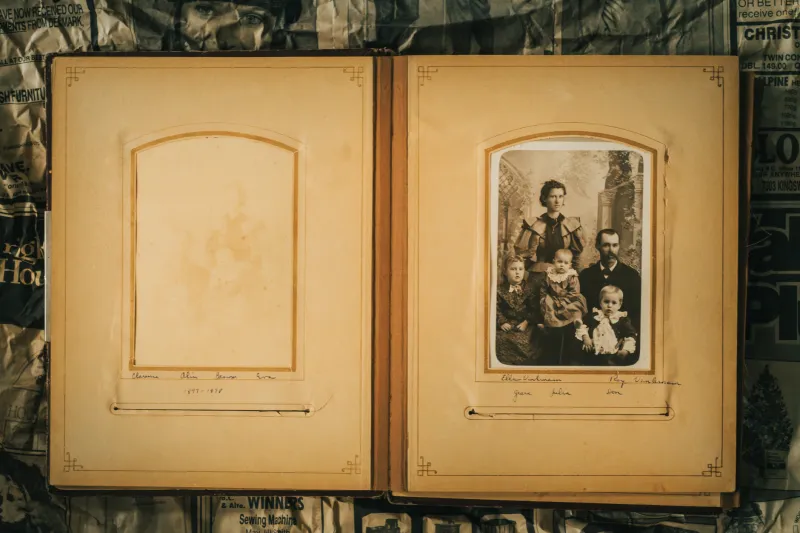
There is a particular quality of silence that descends when someone lifts a christening gown from its tissue paper wrapping. It is not the silence of emptiness, but of accumulated time — of every small body that has worn the garment, every prayer that has been breathed over it, every font at which it has been held aloft beneath the light of a stained-glass window. In homes across Chinnor and the surrounding Chilterns villages, objects such as these occupy a singular place in family life: not merely inherited possessions, but sacred anchors connecting the present to a deep well of faith.
More Than Cloth and Leather
To speak of religious heirlooms is to speak of a category of object that defies easy classification. A christening gown is, on one level, a garment of cotton or silk. A family Bible is, technically, a printed book. Yet ask the families who guard these things what they represent, and the answers move swiftly beyond the material.
Margaret Holloway, a lifelong member of St Andrew's in Chinnor, has in her possession a christening gown that her great-grandmother sewed by hand in the early years of the twentieth century. The garment has been worn at baptisms spanning more than a century, most recently by her own granddaughter just three years ago. "When I hold it," she says quietly, "I think of all the promises that have been made whilst it was being worn. Every one of those baptisms was a family standing before God and saying, we intend to raise this child in faith. The gown carries all of that."
 Photo: St Andrew's, via thumbs.dreamstime.com
The physical evidence of those promises is visible in the fabric itself: a faint yellowish tinge where age has settled into the lace, a tiny repair near the hem executed in thread slightly mismatched to the original. These are not flaws. They are, in Margaret's words, "the marks of being loved and used."
The Family Bible as Living Document
If the christening gown speaks of beginnings, the family Bible often tells the whole story. In many Chilterns households, the Bible passed down through generations is less a devotional text than a family archive — its flyleaves and margins dense with handwritten entries recording births, marriages, deaths, and occasionally notes of a more intimate spiritual nature.
David Farrow, whose family has attended Chinnor Baptist Church for three generations, inherited a King James Bible originally belonging to his great-grandfather, a farm labourer who settled in the village in the 1890s. The entries begin in a careful copperplate hand and continue, generation by generation, in scripts that grow progressively less formal. "You can actually watch handwriting change across a hundred years," David observes with a quiet smile. "My great-grandfather's entries are very precise, very deliberate. My grandfather's are a bit looser. My father's are barely legible." He pauses. "But they all recorded the same things: new life, new unions, loss."
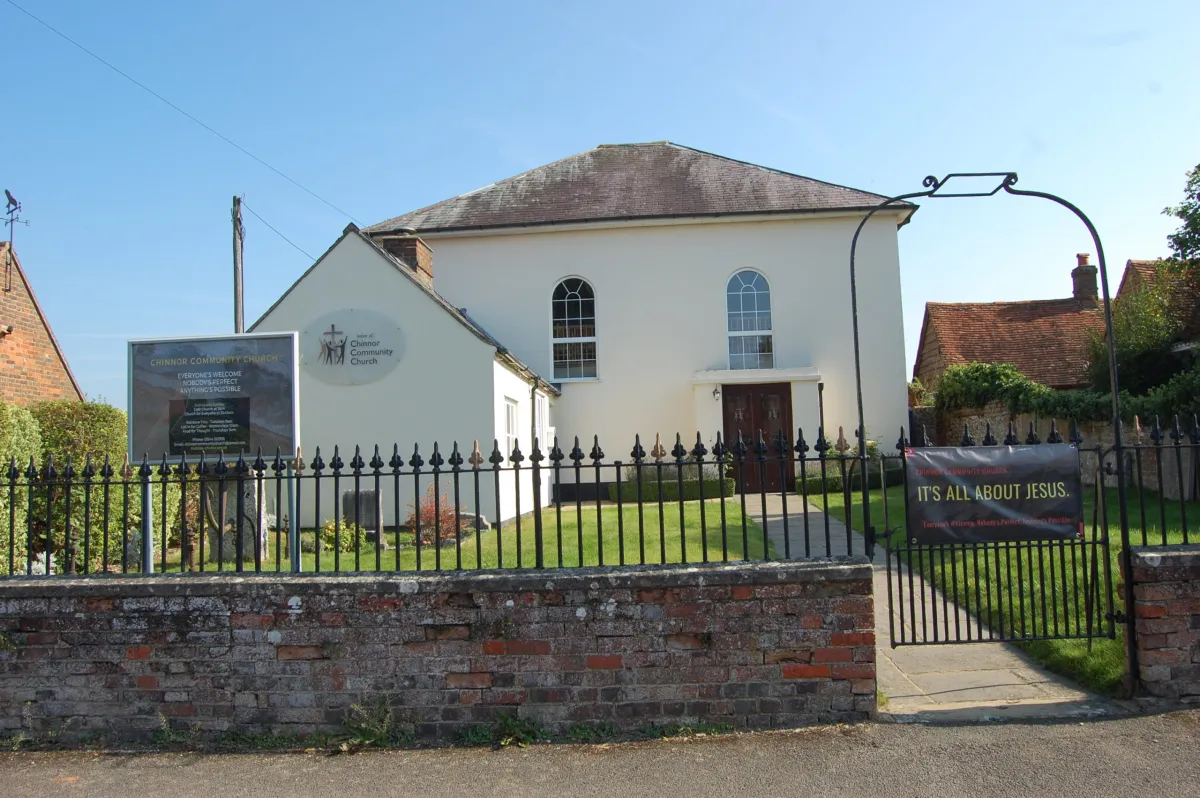 Photo: Chinnor Baptist Church, via www.chinnorparishcouncil.gov.uk
What strikes David most is a note his great-grandfather wrote beside the Twenty-Third Psalm during the First World War, when two of his sons were serving in France. The note reads simply: Lord, bring them home. Both men survived. "I don't know whether he thought God answered that prayer because of the Bible, or just because of the prayer," David reflects. "But the fact that he wrote it there — in the most important book in the house — tells you something about how seriously he meant it."
Objects of Ritual, Objects of Comfort
Not all sacred heirlooms carry the weight of long lineage. Some acquire their significance through intensity of use rather than length of years. Rosemary Tanner, who worships at the Chinnor Methodist Chapel, describes a small wooden cross given to her mother by a hospital chaplain during a serious illness in the 1970s. Her mother held it throughout her recovery and, decades later, pressed it into Rosemary's hands during her own period of ill health. "She said, 'This has been prayed over many times. It will help you.'" Rosemary kept it on her bedside table for months. "I'm not superstitious," she is careful to add. "I know the cross isn't magic. But it represented the prayers of my mother, and her mother's prayers before that, and somehow that felt very real."
This distinction — between superstition and what might be called material faith — is one that clergy in the area take seriously. The Reverend Jonathan Clarke, who serves across two of Chinnor's Anglican congregations, notes that Christianity has always maintained a complex relationship with physical objects. "We are not a tradition that dismisses the material world," he says. "The Incarnation itself is a statement that matter matters — that the sacred can dwell in the physical. So when a family tells me that a particular Bible or a particular cross helps them feel connected to God and to those they have loved, I take that very seriously indeed."
Passing the Flame
The transmission of these objects from one generation to the next is rarely a simple transaction. Several families describe careful, deliberate rituals of handover — the heirloom brought out at a significant moment, its history explained, its significance conferred. Others speak of more organic inheritances: the Bible simply always being there, the gown always being worn, the meaning absorbed rather than explicitly taught.
For the Holloway family, the christening gown is now accompanied by a handwritten card listing every child who has worn it, the date of their baptism, and the church at which the service was held. The card was begun by Margaret's mother and now runs to eleven names across four generations. "When my granddaughter is old enough, she will read that card and understand that she is part of something much larger than herself," Margaret says. "That is the whole point, really. We are not isolated individuals. We are part of a long line of people who chose to say yes to God."
A Living Inheritance
What these heirlooms ultimately represent is a form of testimony that transcends the spoken word. Sermons fade from memory; theological arguments may be forgotten or superseded. But a gown that has been worn at the font by a great-great-grandmother, a Bible whose margins hold the prayers of someone long dead, a cross that has been held through suffering and recovery — these things speak with a directness and intimacy that no liturgy entirely replicates.
In a culture that sometimes struggles to transmit faith from one generation to the next, the churches of Chinnor and the wider Chilterns might do well to recognise the ministry performed, quietly and without fanfare, by the objects kept in drawers and on high shelves across the parish. They are not relics in the ecclesiastical sense. They are something more democratic and more tender than that: the material evidence that ordinary families, in ordinary homes, have loved God and one another across the full span of their years.