Rung Into Being: The Ancient Art of Bell-Ringing and Its Enduring Hold on Chinnor Life
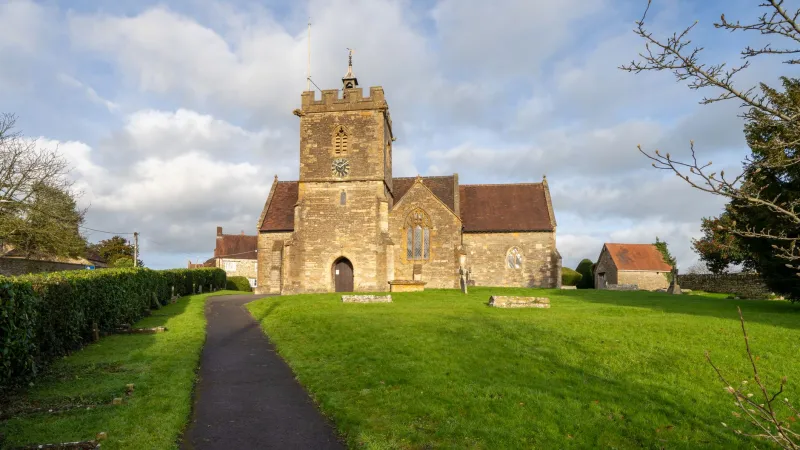
On a still Sunday morning in Chinnor, before the first car engine turns over on the high street, before the kettle whistles in the kitchen, there is the sound of bells. They drift across rooftops and gardens, through hedgerows and down lanes, arriving not as noise but as something older and more insistent — a summons that the village has been answering for the better part of a thousand years.
Bell-ringing is one of those traditions so deeply embedded in English parish life that it is easy to take for granted. Yet behind each peal lies hours of practice, a rigorous understanding of mathematical sequencing, and a form of collective discipline that few communal activities can match. For the ringers themselves, it is also something more difficult to articulate: a form of prayer, perhaps, or at the very least a form of devotion.
The Mechanics of the Miraculous
To stand in a bell tower during a full peal is to understand immediately that this is not a casual pursuit. The bells — which at St Andrew's Church in Chinnor number eight, each tuned to a precise pitch — hang on wheels and are swung through a full circle by the ringer below, who controls both the ascent and descent of the clapper through the careful management of a rope. The weight involved is considerable; a single bell may tip the scales at several hundred kilogrammes.
What distinguishes English change-ringing from carillon or handbell traditions elsewhere in the world is its reliance on mathematical permutation. Ringers do not play a melody in the conventional sense. Instead, they work through a series of "changes" — arrangements of the bells in different sequences — according to methods that have names as evocative as any hymn: Grandsire Doubles, Plain Bob Minor, Stedman Triples. Learning to ring well demands not only physical coordination but a capacity to hold complex numerical patterns in the mind while responding in real time to the actions of fellow ringers.
"People assume it's like playing a tune," explains one long-standing member of Chinnor's tower captain team, who has been ringing for more than three decades. "But it's really closer to a conversation. You have to listen constantly — to the bells, to the other ringers, to the space itself. When it goes well, there's a harmony that goes beyond sound."
Marking the Moments That Matter
The bell tower has always served as the village's acoustic diary. Weddings are announced with jubilant, open rounds; funerals are marked with the solitary toll of a single bell, its measured repetitions counting out a life. The birth of a child, the coronation of a monarch, the end of a war — all have been proclaimed from towers like the one that rises above St Andrew's, its stones worn smooth by generations of hands.
This calendar function remains as vital as ever. When a young couple marries in Chinnor, the ringers assemble without fanfare and give the occasion a sound it could not otherwise have. When a long-serving parishioner dies, the muffled peal — achieved by fitting leather pads to the clappers — carries a weight of grief that no order of service can fully replicate.
"You feel the difference in the rope when the bells are muffled," says one ringer who joined the tower band after attending a ringing open day some years ago. "It's heavier, somehow. More solemn. It reminds you that what you're doing is not just technical — it's pastoral."
A Meditative Practice in a Distracted Age
In recent years, bell-ringing has attracted a quiet but growing interest from those seeking structured, embodied forms of contemplation. Unlike meditation apps or mindfulness courses, the bell tower offers no option for distraction. The mobile phone must be pocketed. The mind must be present. The body must work in synchrony with others. For many ringers, this enforced attentiveness is precisely the point.
Several members of Chinnor's ringing community describe the experience in terms that echo monastic practice — the repetition of patterns, the discipline of showing up week after week regardless of mood or circumstance, the sense of being part of something larger than oneself. "I don't always come to ring with the right frame of mind," admits one ringer who joined following a difficult period in her personal life. "But I always leave feeling steadier. There's something about the physical effort, the concentration, the sound — it resets you."
This spiritual dimension is not lost on the clergy who worship beneath the towers. Several local incumbents have spoken of the bells as a form of pre-liturgical preparation — a sonic threshold that shifts the atmosphere of a building before the congregation even arrives.
Keeping the Towers Alive
Like many specialist traditions, bell-ringing faces the perennial challenge of recruitment. The skill takes time to acquire — most experienced ringers estimate that a year of regular practice is needed before a newcomer can ring competently in a Sunday service touch — and the towers themselves require ongoing maintenance that is rarely cheap.
The Central Council of Church Bell Ringers, which coordinates the wider movement across England, has invested significantly in outreach and teaching resources in recent years. Locally, Chinnor's tower captain has worked with neighbouring parishes in the Chilterns to establish joint practice evenings, allowing learners to build experience across multiple towers and ensuring that smaller bands are not left without cover.
The rewards, for those who persevere, are considerable. Bell-ringers form a community within a community — one that crosses denominational, generational, and social boundaries with unusual ease. A retired headteacher may ring alongside a teenager who joined after a school visit. A lifelong Anglican may find herself sharing a rope with someone who has no particular faith but an abiding love of the craft.
The Sound That Remains
There is a phrase sometimes used in ringing circles: a peal, once rung, cannot be unrung. It is meant partly as a caution — mistakes in change-ringing are audible and irrevocable — but it carries a deeper resonance. The bells that sounded over Chinnor when the village was young are gone, melted down or recast, but the tradition they embodied continues. Each Sunday, each wedding, each funeral, each festival, the ringers climb the tower stairs and take up the ropes, and the sound goes out again across the Chilterns, connecting the present to an unbroken past.
For those who live within earshot, the bells are simply part of the landscape — as natural as birdsong or wind. For those who ring them, they are a vocation, a discipline, and a gift offered freely to anyone who cares to listen.