Still Waters: The Quiet Revolution of Contemplative Prayer Transforming Chilterns Worship
An Unexpected Hunger for Stillness
On the surface, a church service with no hymns, no sermon, and no spoken liturgy might sound like a service that has simply stopped working. Yet in several congregations across the Chinnor area, precisely this kind of gathering is drawing people through the door — some for the first time in years, others for the very first time in their lives.
Contemplative prayer, long associated with monastic communities and the mystical traditions of the medieval church, is experiencing a quiet but unmistakable renewal in Chilterns village life. Monthly silent prayer mornings, Quaker-influenced open worship, and guided meditation sessions rooted in Christian tradition are all finding a place alongside — and sometimes in place of — conventional Sunday services. The movement is modest in scale but significant in what it suggests about the spiritual appetite of people living in this part of Oxfordshire.
"We had perhaps twelve people at our first contemplative morning," recalls one lay leader involved in organising a regular silent gathering at a church near Chinnor. "By the third session we had nearly thirty. Nobody advertised it heavily. People simply told their neighbours."
What Contemplative Prayer Actually Involves
It is worth being precise about what this practice entails, since the term is sometimes used loosely. Contemplative prayer, in the Christian tradition, draws on the writings of figures such as Thomas Merton, Julian of Norwich, and the anonymous fourteenth-century author of The Cloud of Unknowing. It involves setting aside verbal petition and structured thought in favour of a receptive, attentive silence before God — what the Psalmist described as being still and knowing.
In practice, a contemplative gathering in a Chinnor-area church might begin with a brief reading of scripture, followed by twenty to thirty minutes of shared silence. There may be no musical accompaniment, no prayers read aloud, and no address from a minister. Participants sit together in the space — sometimes in a circle rather than in pews — and simply wait. The session typically closes with a short blessing or a spoken line of scripture, and then people are free to depart or remain to talk quietly.
Some gatherings incorporate the practice of lectio divina, a slow, meditative reading of a short passage of scripture repeated several times, with periods of silence between each reading. Others draw on the Quaker tradition of open worship, in which any participant may speak briefly if they feel moved to do so, but in which silence is the default and the norm.
Who Is Coming, and Why
The demographic profile of those attending contemplative gatherings is striking. Church leaders across the Chinnor area report that these sessions attract a notably diverse mix of people: faithful churchgoers of many decades who feel that conventional services no longer nourish them as they once did; individuals who have drifted away from church and find that silent prayer offers a gentler re-entry than a full Sunday morning service; and a smaller but meaningful number of people who would not describe themselves as Christians at all, but who are drawn to the idea of a quiet, reflective space rooted in something larger than themselves.
"There is a real weariness with noise," observes one minister who has introduced contemplative elements into his congregation's programme. "People are bombarded with information and demands from the moment they wake up. The idea of sitting in an old stone building in silence, with other people, for half an hour — that is genuinely countercultural now. It meets a need that a forty-minute sermon, however good, does not always meet."
For some longstanding churchgoers, the move towards contemplative practice represents a deepening rather than a departure. They have prayed the liturgy faithfully for years and find that silence allows them to inhabit that faith at a different level of depth. For newcomers, particularly those who find traditional hymns or doctrinal language alienating, the absence of content can paradoxically feel more welcoming.
The Tension With Tradition
Not everyone, it must be said, is enthusiastic. Some members of Chinnor-area congregations worry that the drift towards silence represents a softening of theological conviction — a retreat from the specific claims of Christian faith into something more vaguely spiritual. Others simply value the structure and community of traditional worship and feel that a silent gathering lacks the warmth and shared expression that Sunday mornings provide.
These are legitimate concerns, and those leading contemplative initiatives are generally careful to frame them not as replacements for conventional worship but as supplements. The silent morning is offered alongside the parish Eucharist, not instead of it. The Quaker-style gathering meets on a weekday evening, leaving Sunday morning unchanged.
There is also a question of accessibility. For people with anxiety, neurodivergence, or certain kinds of trauma, an extended period of enforced silence in a group setting can be uncomfortable rather than restful. Good practice in this area involves being clear about what to expect, ensuring that no one feels pressured to remain silent if they find it distressing, and making it easy for people to leave quietly if they need to.
An Ancient Practice Finding New Ground
What is perhaps most striking about this movement is how old it actually is. The Christian contemplative tradition predates the Reformation by more than a thousand years. What feels radical and innovative in a twenty-first century Chilterns village is, in historical terms, a recovery of something that was once central to the life of the church.
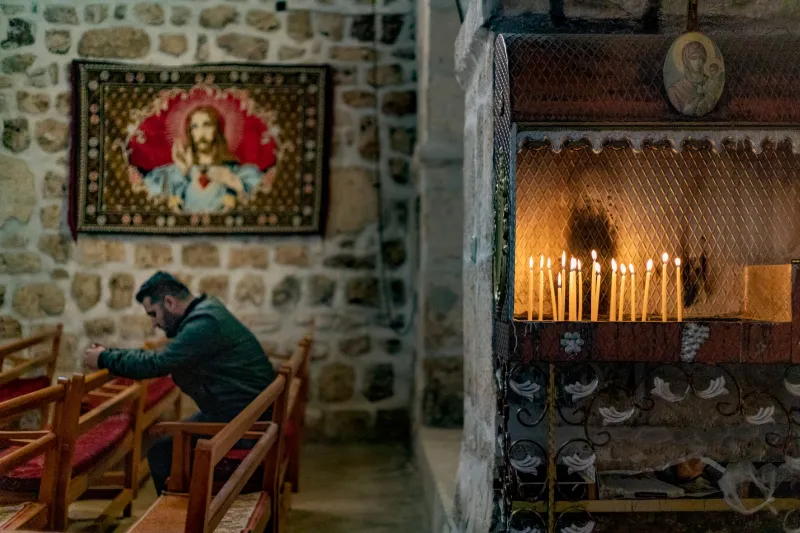
That recovery is happening, gently and without fanfare, in spaces that have held human prayer for centuries. The old stone walls of Chinnor's churches have absorbed a great deal of sound over the years — choral anthems, harvest hymns, funeral prayers, children's laughter. They are well suited, it turns out, to absorbing silence too.
For those who have discovered contemplative prayer, the experience is often described not as finding something new, but as coming home to something they did not know they had been missing. In that sense, it feels entirely consistent with the long life of faith in this corner of the Chilterns.