The Gift of Nothing: How Chinnor's Congregations Are Discovering the Spiritual Depth of Sacred Silence
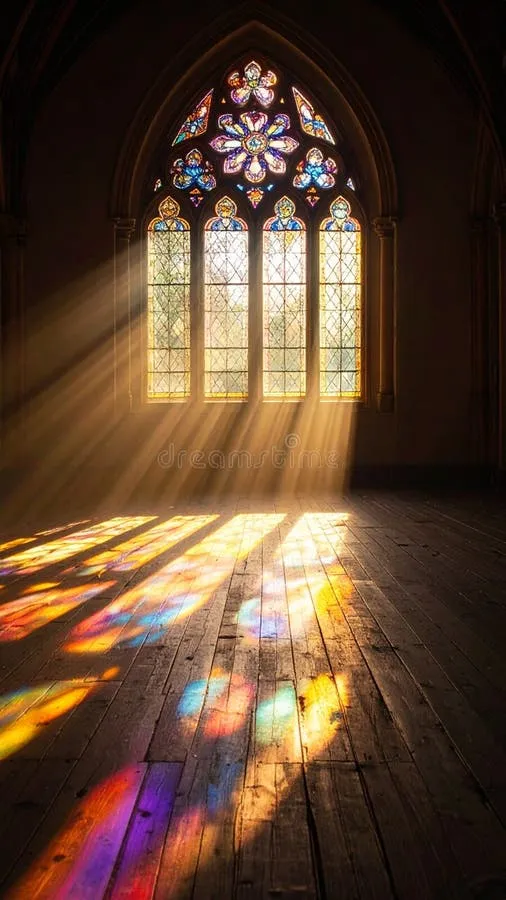
Photo: quiet empty church interior sunlight through stained glass window peaceful, via thumbs.dreamstime.com
There is a moment, perhaps thirty seconds into an unannounced pause during a Sunday morning service, when a congregation collectively holds its breath. Hymn books remain open. Eyes drift to the floor or the stained glass. And then, almost imperceptibly, something shifts. Shoulders drop. Breathing deepens. The fidgeting stops. For those who have experienced it, that moment of communal silence can feel more spiritually charged than any sermon.
Across Chinnor and the surrounding Chilterns, a quiet but meaningful movement is taking root. Churches of varying traditions are deliberately incorporating extended periods of silence into their worship, their meeting spaces, and their wider parish programmes — not as an absence of something, but as a presence in itself.
Noise as the New Normal
It is difficult to overstate how saturated modern life has become with sound. Smartphones deliver a constant stream of notifications. Open-plan offices hum with conversation. Even the journey home from work is punctuated by podcasts, music, and the low roar of traffic. For many people in Chinnor — commuters to London, parents managing busy households, young professionals tethered to their devices — genuine quiet has become a luxury they can scarcely remember experiencing.
This context matters enormously when considering why churches are now positioning silence not as awkwardness to be filled, but as a gift to be offered. The Revd Margaret Hollis, who leads one of Chinnor's Anglican congregations, describes the shift in straightforward terms. "People arrive on a Sunday morning already exhausted," she explains. "They've been bombarded all week. If we simply add more words, more music, more announcements on top of that, we're not actually offering them anything different from what the world already provides. Silence is different. Silence asks something of them — and gives something back."
A Theology of Quiet
The theological roots of sacred silence run deep across Christian tradition. The Desert Fathers of the third and fourth centuries withdrew into the Egyptian wilderness specifically to encounter God in stillness, producing a body of wisdom — the Apophthegmata Patrum — that continues to shape contemplative practice today. The Quakers built an entire tradition of corporate worship around expectant silence. Benedictine monasteries have, for fifteen centuries, structured daily life around the rhythm of the Divine Office and the Great Silence observed from Compline until morning.
In more recent decades, the Taizé Community in Burgundy has drawn millions of young Europeans to its services precisely because of the long, meditative silences woven between simple chants. The movement's influence is increasingly visible in British parish churches, including several in the Chilterns.
Father Thomas Aldridge, who serves a Catholic congregation in the area, points to the ancient concept of hesychia — a Greek term for stillness or tranquillity — as foundational. "In Eastern Christian spirituality, silence is not passive," he notes. "It is the condition in which the heart becomes attentive to God. The noise we make in worship can be beautiful and necessary, but without silence, we risk worshipping our own activity rather than the divine."
What Chinnor's Churches Are Actually Doing
The practical expressions of this renewed interest in silence vary considerably from congregation to congregation, which is part of what makes the movement so interesting to observe.
At one local Methodist chapel, a monthly 'Still Sunday' service has replaced the usual programme of readings and hymns with a largely silent format: a brief scriptural text, a period of twenty minutes of open quiet, and a simple spoken blessing. Attendance at these services has grown steadily over the past eighteen months, drawing not only regular churchgoers but also several people who describe themselves as spiritual but not formally religious.
Elsewhere, a small ecumenical group has established a 'quiet room' within a church hall — a space stripped of clutter, softly lit, and available throughout the week for anyone who wishes to sit in silence without explanation or obligation. A simple notice on the door reads: You are welcome here. You do not need to say anything. The room, it is reported, is rarely empty.
Several congregations have also introduced silent retreats — typically a day or weekend at a retreat house in the Chilterns — as part of their annual programme. These are no longer the preserve of clergy or committed contemplatives. Parish secretaries, Sunday school teachers, and people in the early stages of faith enquiry have all attended, often finding the experience transformative.
Younger Worshippers and the Search for Stillness
Perhaps the most striking development is the response from younger adults. Conventional wisdom has long suggested that contemporary worship — upbeat music, accessible language, multimedia presentations — is the key to engaging the under-forties. And there is certainly evidence to support that view. But an equally compelling counter-narrative is emerging.
Several of Chinnor's church leaders report that it is precisely the younger members of their congregations — and people in their twenties and thirties exploring faith for the first time — who respond most powerfully to silence. This is not entirely surprising. A generation that has grown up in the digital age is also, paradoxically, the generation most acutely aware of its costs. Anxiety, burnout, and a profound longing for depth and authenticity are widely documented among younger adults in the UK.
"They're not looking for entertainment," says one youth worker attached to a Chinnor congregation. "They can get entertainment anywhere. What they can't easily find is permission to be quiet, to be still, to not have to perform or produce anything. When the Church offers that — genuinely and without pressure — it can be quite remarkable."
The Challenge of Implementation
Introducing silence into established worship patterns is not without its difficulties. Some longer-standing congregants find extended quiet uncomfortable, even unsettling. There are questions of accessibility — for those with anxiety disorders or neurodivergent profiles, unstructured silence can be distressing rather than restoring. Thoughtful churches are addressing this by offering guidance beforehand, providing simple focus objects such as a candle or a stone, and making clear that silence is an invitation rather than a requirement.
Leadership, too, requires a certain confidence. Holding a silence of five minutes in front of a congregation demands that the person leading worship resist every instinct to speak, to explain, to reassure. It is, in a sense, an act of faith in itself.
A Different Kind of Fullness
What those who have persisted with silent practice consistently report is not emptiness, but the opposite: a quality of presence, attentiveness, and connection that is difficult to articulate but unmistakable once experienced. In a culture that equates busyness with value and noise with vitality, the Church's willingness to offer silence may be one of its most countercultural and most needed gifts.
As the Revd Hollis puts it, with characteristic understatement: "We talk a great deal about the peace of God that passes all understanding. Perhaps it is time we stopped talking about it long enough to let people actually experience it."
In Chinnor's churches, at least, the experiment is well underway.