Petals and Prayer: The Quiet Devotion of Chinnor's Church Flower Ministry
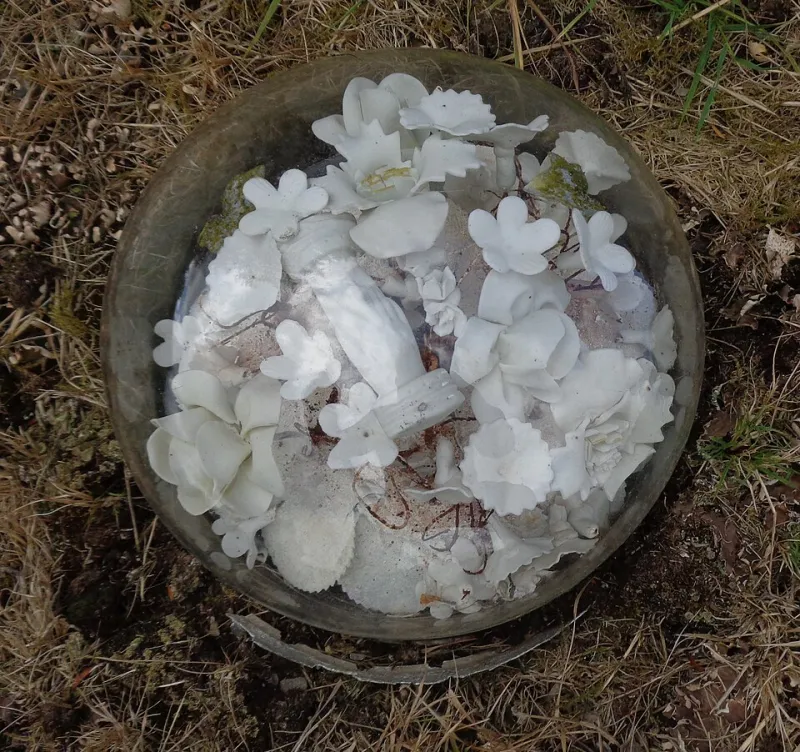
Photo: Rosser1954, CC BY 4.0, via Wikimedia Commons
Petals and Prayer: The Quiet Devotion of Chinnor's Church Flower Ministry
Long before the first hymn is sung on a Sunday morning, and well before the congregation gathers in the pews, a small group of dedicated volunteers will already have been at work. Armed with buckets, secateurs, and an instinctive understanding of the liturgical calendar, Chinnor's church flower arrangers quietly transform their sanctuaries into places of living beauty. It is a ministry that rarely seeks recognition, yet its impact upon the atmosphere of worship is profound and immediate.
A Ministry Written in Blooms
To speak of flower arranging in a church context is to speak of something far older than the craft itself. The use of flowers and foliage in sacred spaces stretches back through centuries of Christian tradition, drawing on the symbolism embedded in the natural world. White lilies evoke resurrection; holly and ivy speak of incarnation; the deep red of the Advent rose carries both anticipation and sacrifice. For the flower arrangers serving congregations across the Chinnor area, this symbolic language is not merely decorative—it is theological.
"Every arrangement is a kind of sermon," explains one long-serving member of a local flower guild. "When I'm choosing colours and textures for Pentecost, I'm thinking about fire and wind and the Holy Spirit. It's not just about what looks pretty. It's about what speaks."
This theological intentionality distinguishes church flower arranging from its secular counterpart. Where a florist working on a wedding or corporate display may prioritise visual impact alone, the church flower arranger must hold in tension the requirements of the liturgical season, the architecture of the building, the nature of the service, and the emotional needs of the congregation.
The Rhythm of the Liturgical Year
For those involved in this ministry, life is shaped by a deeply satisfying rhythm. The stripped-back simplicity of Lent, when many churches remove flowers entirely or restrict arrangements to foliage only, gives way to the extraordinary abundance of Easter. The weeks of Ordinary Time offer creative freedom, whilst Advent brings its own distinctive palette of purples, blues, and candlelight gold.
Perhaps the most emotionally demanding occasion on the floral calendar is Remembrance Sunday. In churches across the Chilterns, the transition from the warm autumnal tones of harvest to the sombre dignity of poppies and laurel requires both sensitivity and skill. Arrangements for this service are often prepared with particular care, incorporating locally sourced materials and, in some cases, flowers chosen specifically to honour individuals named in the parish war memorial.
 Photo: Remembrance Sunday, via verwood.gov.uk
"Remembrance Sunday is different," reflects one arranger who has served her church for more than two decades. "You're not just filling a space. You're holding grief. The flowers have to be dignified and still—not showy. It's one of the most important things we do all year."
Christmas, by contrast, invites generosity and abundance. The transformation of a Chilterns church interior on Christmas Eve—candlelight catching the silver and white of seasonal foliage, the deep fragrance of pine and eucalyptus filling the nave—represents the culmination of weeks of planning, sourcing, and preparation.
Community Grown in Church Halls
What is perhaps least visible from the outside is the depth of community that forms among those who share this ministry. Flower preparation sessions, often held in church halls or vestries on Friday mornings or Saturday afternoons, have become cherished gatherings in their own right. Tea is made, conversation flows, and friendships are sustained across years and even decades.
For many participants, the flower guild has provided a point of connection during periods of personal difficulty. Several members across Chinnor's congregations describe having joined at times of transition—retirement, bereavement, relocation—and finding in the shared work of the flower team a community they had not anticipated.
"I moved to the village not knowing a soul," says one arranger who joined her local flower guild several years ago. "Within a month, I had people I could call friends. We talk about everything—faith, family, worries. The flowers are almost an excuse to be together."
This social dimension is not incidental. It reflects a broader understanding within Chinnor's faith communities that ministry is rarely solitary. The collective act of preparing a space for worship is itself a form of worship—an offering made in community, for community.
Welcoming New Hands
One of the most encouraging developments in recent years has been the conscious effort by flower guilds across the area to welcome newcomers, including those with no prior experience of floristry. Several groups now offer informal training sessions and pair new members with experienced arrangers, ensuring that skills and knowledge are passed on across generations.
The investment in training reflects a recognition that this ministry, like many others within the church, depends upon the willingness of each generation to share what it has learned. The particular techniques required for working in a church setting—understanding how arrangements must be visible at a distance, how stems must be conditioned to last across a full week of services, how to work with the architectural features of historic buildings—are not always intuitive and benefit from patient instruction.
"We're very welcoming," says one guild coordinator. "You don't need to have done a floristry course. You just need to be willing to learn and to give your time. The rest follows naturally."
Beauty as an Act of Faith
At its deepest level, the ministry of floral arrangement in a church setting is an act of faith expressed through beauty. It rests on the conviction that the spaces in which people encounter God deserve to be tended with care and creativity—that the visual environment of worship matters, and that the natural world, with all its colour and fragrance and transience, has something to say about the character of the God who created it.
For the volunteers who give their Friday mornings and Saturday afternoons to this quiet work, the reward is not recognition but participation—in the life of their congregation, in the rhythm of the Christian year, and in the ancient, ongoing conversation between creation and Creator.
In Chinnor's churches, as the seasons turn and the flowers change, that conversation continues, one arrangement at a time.