Open Doors, Open Hearts: Building Bridges Across Cultures in Chinnor's Churches
Beyond the Welcome Mat
When Amara Okafor first walked through the doors of St Andrew's Church in Chinnor eighteen months ago, she wasn't sure what to expect. Having fled conflict in Nigeria with her three young children, she spoke limited English and knew nothing of Anglican traditions. Today, she serves as a volunteer translator for the church's refugee support programme and describes her congregation as "my second family."
Her story reflects a quiet transformation taking place across Chilterns churches as established congregations grapple with how to authentically welcome newcomers from radically different cultural backgrounds. It's a challenge that requires more than good intentions—it demands genuine commitment to change, cultural sensitivity, and the courage to let traditional practices evolve.
The New Face of British Christianity
The demographics of faith communities across the UK are shifting rapidly. Recent arrivals from Syria, Afghanistan, Eritrea, and other conflict zones are joining existing migrant communities from Eastern Europe, Africa, and Asia. For many Chilterns parishes, this represents both an opportunity and a challenge.
"We knew we had a choice," explains Rev. Patricia Knowles of Holy Trinity, Bledlow. "We could remain a comfortable, homogeneous community, or we could embrace the diversity that God was bringing to our doorstep. We chose to open our doors wider."
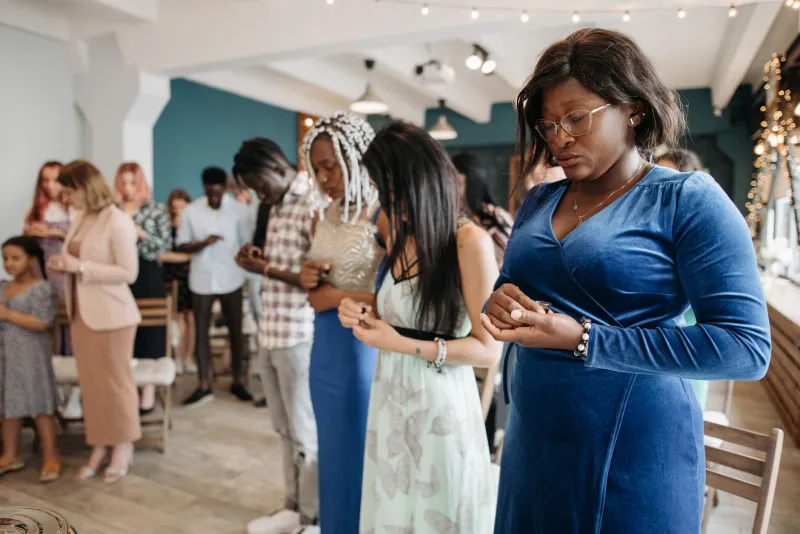
That choice has led to remarkable transformations. Sunday services now regularly feature prayers in multiple languages. The church hall hosts English conversation classes three evenings a week. Most significantly, the congregation has discovered that welcoming strangers has enriched their own spiritual lives in unexpected ways.
Language as Bridge and Barrier
Communication remains the most immediate challenge facing churches seeking to integrate newcomers. Traditional solutions—translated service sheets or interpreters—often feel inadequate when dealing with the complexity of Christian worship and community life.
Chinnor Methodist Church has pioneered a different approach through their 'Language Partners' programme. Established members are paired with newcomers not just to teach English, but to learn about each other's cultures and faith experiences.
 Photo: Chinnor Methodist Church, via supertipp-online.de
"I thought I was helping Fatima learn English," reflects programme volunteer Margaret Stevens. "Instead, she taught me about resilience, about trusting God in circumstances I can't imagine. Our friendship has deepened my own faith."
The programme has expanded beyond language learning to include practical support with housing applications, school enrollment, and navigating the NHS—tasks that can be overwhelming even for those with strong English skills.
Cultural Exchange in Worship
Integrating diverse cultural expressions into traditional British worship presents both opportunities and tensions. Some changes have been embraced enthusiastically—the addition of African drumming to certain services, or the inclusion of Arabic Christian hymns during special occasions.
Other adaptations require more careful negotiation. At St Bartholomew's in Great Haseley, the introduction of call-and-response elements borrowed from African Christian traditions initially met resistance from some long-standing members.
"Change is never easy," acknowledges churchwarden David Phillips. "But we've learned that authentic welcome sometimes means allowing our own worship style to be influenced by the gifts that newcomers bring."
The church now regularly features what they call 'World Church Sundays,' where different cultural communities lead aspects of worship, sharing traditional songs, prayers, and testimonies. These services have become among the most well-attended of the year.
Beyond Sunday: Practical Integration
True integration extends far beyond Sunday morning worship. Churches across the Chinnor area have developed comprehensive programmes addressing the practical challenges facing newly arrived families.
Our Lady of Lourdes Catholic Church operates a weekly 'Life Skills' workshop covering everything from understanding utility bills to navigating the British education system. The sessions are led jointly by established parish members and successfully integrated refugees who can share their experience of adapting to UK life.
"We learned early on that information is most trusted when it comes from someone who has walked the same path," explains parish coordinator Anne Murphy. "When Hassan explains the school application process, families listen in a way they might not with a well-meaning volunteer who has never faced these challenges."
The programme has evolved to include job search support, driving theory preparation, and even guidance on British social customs that can perplex newcomers—from queuing etiquette to the significance of small talk about weather.
Children as Cultural Ambassadors
Perhaps nowhere is integration more natural than among children. Church youth programmes across the area report that young people from different cultural backgrounds form friendships that transcend language barriers and cultural differences.
The Chinnor Churches Youth Group has become particularly diverse, with members from more than a dozen different countries. Youth leader Sarah Collins describes watching children naturally navigate cultural differences that adults sometimes struggle with.
"Last month, we had Ramadan, Easter, and Passover all falling close together," she recalls. "The young people were fascinated to learn about each other's traditions. They organised a 'Festival of Light' event where different communities shared their celebrations. It was beautiful to see."
These young friendships often serve as bridges between adult communities, with children encouraging their parents to participate in church activities and cultural exchange events.
Challenges and Honest Conversations
Not every integration effort succeeds. Churches report various challenges, from theological differences between Christian traditions to practical issues around dietary requirements and cultural sensitivities.
Some established members have struggled with the pace of change. Rev. Michael Harrison of St Mary's, Chinnor, acknowledges that honest conversations about discomfort and resistance are necessary parts of the process.
"We've learned that it's better to acknowledge concerns openly rather than pretend they don't exist," he explains. "When longtime members feel their church is changing beyond recognition, we need to address those feelings while also staying committed to our calling to welcome the stranger."
The church now holds regular 'community conversations' where all members can express concerns, share experiences, and work together toward solutions that honour both tradition and transformation.
Stories of Transformation
The most powerful testimonies come from individuals whose lives have been changed through these integration efforts. Dr. Khalil Rashid, a Syrian refugee who arrived in the area three years ago, now serves as a volunteer coordinator for the Chilterns Refugee Support Network.
"When I first came to Britain, I felt invisible," he reflects. "The church made me visible again—not as a problem to be solved, but as a person with gifts to offer. They helped me rebuild not just my life, but my sense of purpose."
Similarly, established church members describe how their involvement in refugee support has transformed their own faith. Janet Morrison, who initially volunteered reluctantly, now describes the work as central to her spiritual life.
"I thought I was being charitable," she admits. "Instead, I discovered that welcoming strangers is how we encounter Christ. These friendships have taught me more about faith than years of sermons."
Looking Forward
As these programmes mature, churches are developing more sophisticated approaches to cultural integration. Plans are underway for a Chilterns-wide conference on multicultural ministry, sharing best practices and addressing common challenges.
The vision extends beyond simply helping newcomers adapt to British church culture. Instead, these congregations are working toward genuinely multicultural communities where diverse traditions enrich worship and different perspectives inform community action.
"We're not trying to create a melting pot where differences disappear," explains Rev. Knowles. "We're learning to be a beautiful mosaic where different pieces create something more beautiful than any single tradition could achieve alone."
In an era of increasing polarisation around immigration and cultural difference, these Chilterns churches are quietly demonstrating that diversity can strengthen rather than threaten community bonds. Their example offers hope that Britain's changing demographics need not be a source of division, but an opportunity for mutual enrichment and deeper understanding.