Chosen for Life: The Quiet Bonds That Godparenthood Weaves Across Chinnor's Congregations
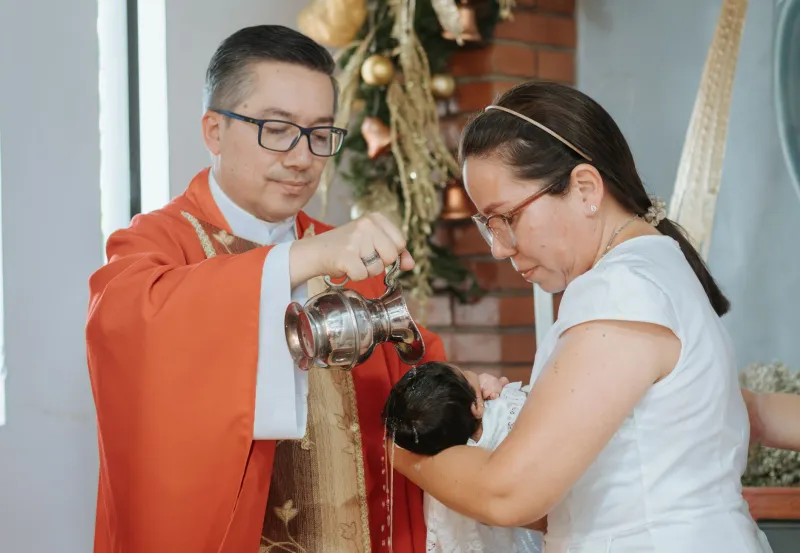
Chosen for Life: The Quiet Bonds That Godparenthood Weaves Across Chinnor's Congregations
There is a moment, familiar to anyone who has stood at a baptismal font, when something shifts. The water is poured, the promises are spoken, and two people — often friends, sometimes family members, occasionally near strangers brought together by circumstance and trust — find themselves bound by something that the Church of England's liturgy describes as a lifelong commitment. Yet for many, the practical reality of godparenthood has, over the decades, drifted towards the ceremonial: a christening gift, a birthday card, perhaps a cheque tucked inside a card at Christmas.
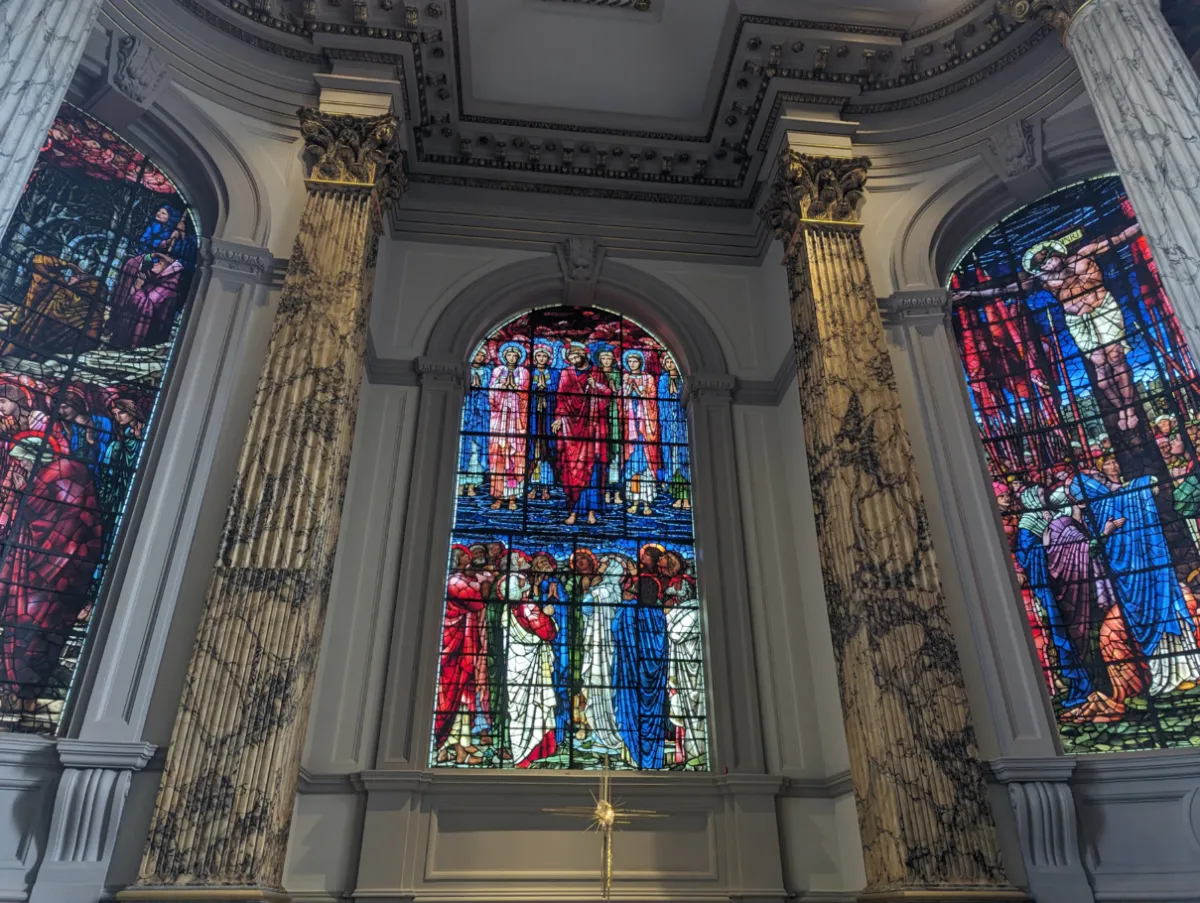 Photo: Church of England, via www.sightmagazine.com.au
Across Chinnor's congregations, however, that drift is being gently but decisively reversed.
More Than a Ceremony
The theological roots of godparenthood run deep. In the early Church, sponsors accompanied adult converts through the catechumenate — a period of intensive formation before baptism — bearing personal responsibility for the candidate's spiritual growth. When infant baptism became the norm, that sponsoring role was transferred to chosen adults who would stand alongside the child's parents, promising to pray, to nurture, and to support the child's journey into faith.
Over centuries, the role became increasingly social rather than spiritual. Yet the promises themselves have never changed. At every Church of England baptism, godparents are asked whether they will pray for the child, draw them by example into the community of faith, and help them take their place within the life and worship of the Church. These are not modest commitments.
"I think many of us said the words without fully understanding what we were agreeing to," reflects one Chinnor godmother, who has held that role for three children across two separate families over the past decade. "It wasn't until I sat in on one of the preparation sessions here that I realised how much was being asked of me — and how much I actually wanted to give."
Preparing Godparents for the Long Road
Several churches in the Chinnor area have begun offering structured preparation for prospective godparents alongside the baptism preparation offered to parents. Rather than a brief conversation with the vicar on the Sunday before the service, these sessions — sometimes running across two or three evenings — explore the theological meaning of baptism, the practicalities of maintaining a godparent relationship as a child grows, and the ways in which the wider congregation can offer support.
One lay minister involved in running such sessions describes the response as consistently surprising. "People arrive expecting a formality and leave with something they didn't anticipate — a sense of genuine vocation. We talk about what it means to be a spiritual companion, not just a ceremonial presence. And something lights up in people when they realise that this relationship can actually matter."
The sessions also address a question that many godparents quietly carry: what if I don't feel sufficiently confident in my own faith to guide someone else? The answer offered by local clergy is neither dismissive nor falsely reassuring. Faith is not a qualification to be achieved before godparenthood begins; it is, rather, something that godparenthood itself can deepen.
Mentorship Circles and Mutual Support
Beyond individual preparation, some Chinnor congregations have experimented with small mentorship groups that bring godparents together to share experiences, pray for their godchildren by name, and support one another through the inevitable uncertainties of the role. These gatherings — informal, often held in someone's front room or over coffee in a church hall — have developed an unexpected warmth.
"There is something quite moving about sitting in a circle with people who are all trying to work out how to be a good godparent," says one participant, a retired teacher who became a godfather for the first time in his sixties. "We swap ideas about how to stay connected as children grow older, how to talk about faith without it feeling forced, how to be present without overstepping. It's become one of the most honest conversations I have."
The social dimension of these groups extends outward in ways that have surprised even their organisers. Families who might otherwise have remained on the periphery of congregational life have found themselves more deeply embedded simply because the godparent relationship draws them back, repeatedly, into the orbit of the church community.
A Thread Running Through the Community
What emerges from conversations across Chinnor's churches is a picture of godparenthood as a kind of connective tissue — stitching together households, generations, and congregations in ways that no formal programme could entirely engineer. A godparent who attends a school nativity play, who sends a card on the anniversary of a baptism, who sits beside a teenager at a confirmation service, is quietly embodying something that the Church has always known but sometimes struggled to articulate: that faith is transmitted not primarily through instruction but through relationship.
For the children themselves, the presence of a godparent who takes their role seriously can offer something distinct from what parents provide — a trusted adult outside the immediate family who holds them in prayer and in affection, who can speak of faith from a slightly different vantage point.
"My godfather was the person who took me seriously as a teenager when I started asking difficult questions about belief," recalls one young adult who grew up attending church in the Chinnor area. "He didn't have all the answers. But he engaged with me honestly, and that mattered more than I can say."
An Ancient Commitment, Freshly Understood
The renewal of godparenthood in Chinnor's churches is not driven by nostalgia, nor by a desire to impose obligation upon unwilling participants. It springs, rather, from a growing recognition that the Church's most enduring gifts to society are rarely institutional. They are personal, relational, and patient — worked out across years and decades in the small gestures of faithfulness that no liturgy can fully capture but every font quietly promises.
As one vicar put it, with characteristic understatement: "When someone agrees to be a godparent, they are agreeing to love a child for life. That is not a small thing. And when we help people understand that, and support them in living it out, the whole community becomes richer."
The font, it turns out, is not where the relationship ends. It is where it begins.