Guardians of the Gallery: The Dedicated Organists Sustaining Sacred Music Across Chinnor's Churches
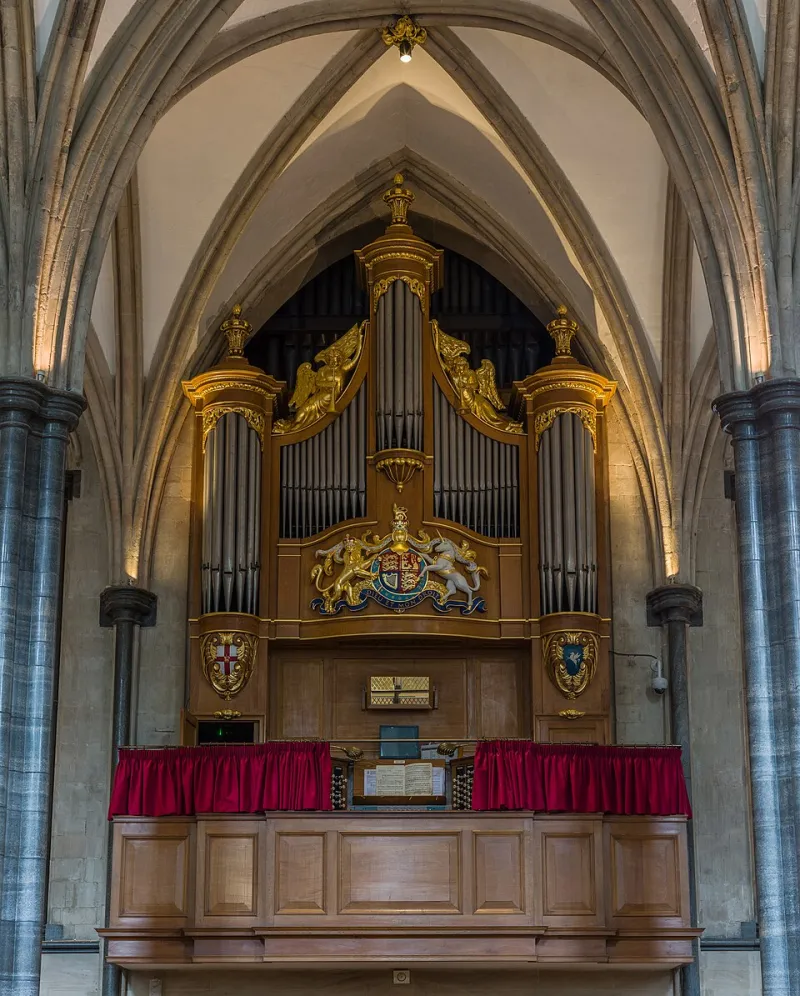
Photo: Diliff, CC BY-SA 3.0, via Wikimedia Commons
Guardians of the Gallery: The Dedicated Organists Sustaining Sacred Music Across Chinnor's Churches
The organ at St Andrew's Church, Chinnor, predates the living memory of every person currently worshipping beneath its pipes. It has accompanied weddings and funerals, harvest festivals and Christmas midnight masses, the baptisms of the young and the final farewells of the old. It has been played, for more than thirty years, by a retired schoolteacher named Geoffrey Marsh, who arrives each Sunday morning at half past eight — an hour before the first service — to warm the instrument up and run through the morning's hymns one final time.
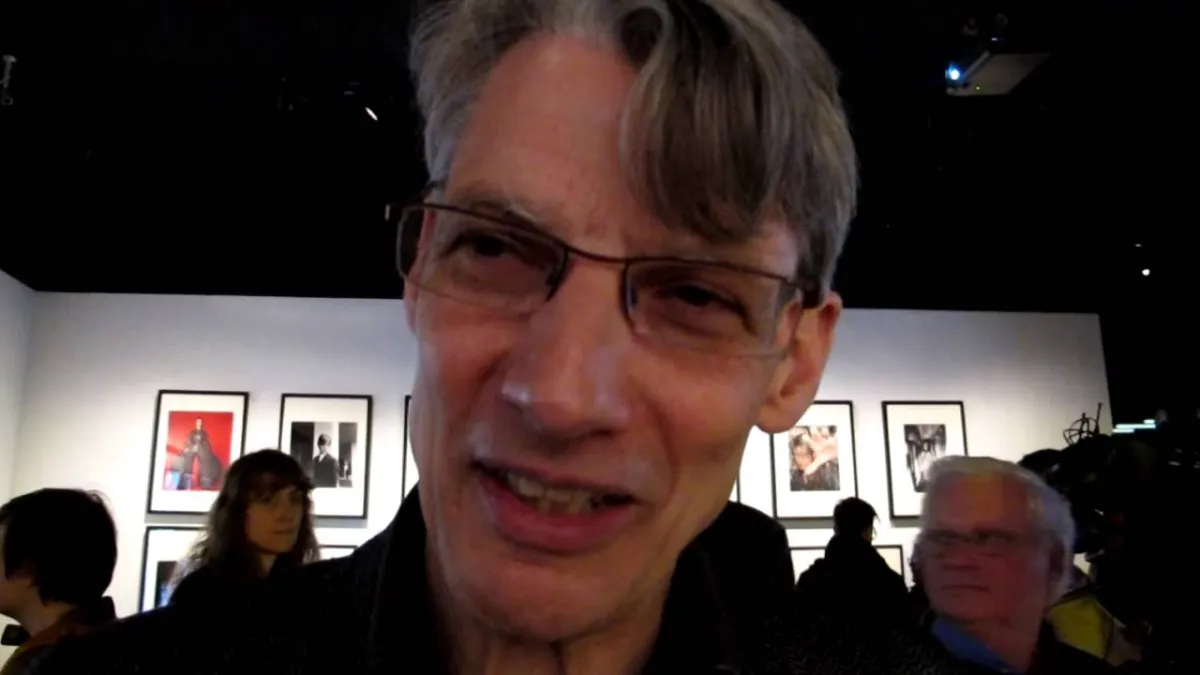 Photo: Geoffrey Marsh, via i.ytimg.com
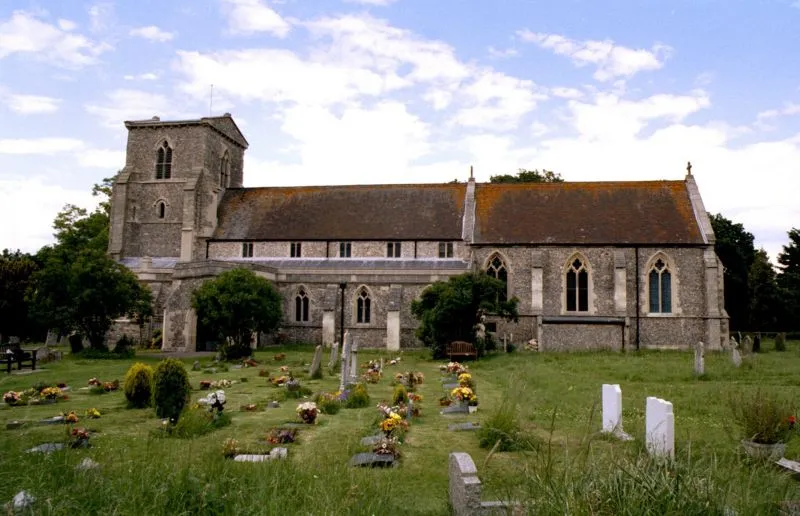 Photo: St Andrew's Church, Chinnor, via s3.britishlistedbuildings.co.uk
"People don't realise how much preparation goes into it," Geoffrey says, seated on the worn bench of the organ loft with the quiet authority of a man entirely at home in his surroundings. "You can't simply sit down and play. The instrument has its own personality, its own moods. On a cold morning, the tuning will have shifted slightly overnight. You have to listen before you play."
A Calling, Not a Hobby
To speak with church organists across the Chinnor area is to encounter a remarkable consistency of vocation. Almost without exception, they describe their role not as a musical hobby conveniently applied to a religious setting, but as a genuine form of ministry — a calling that arrived, in many cases, in childhood, and has never quite relaxed its grip.
Elizabeth Norwood, who plays at the Methodist chapel and has done so for twenty-two years, began learning the organ at the age of twelve under the instruction of her own church's organist, a formidable woman she describes with obvious affection as "terrifyingly precise." "She told me that playing for worship was a form of service," Elizabeth recalls. "Not performance. Service. You are not there to show what you can do. You are there to carry the congregation."
That distinction — between performance and service — recurs throughout every conversation. Peter Aldridge, who deputises across several Chilterns churches when regular organists are unavailable, puts it plainly: "The congregation should not be thinking about the organist. If they are thinking about the organist, something has gone wrong. They should be thinking about God, and the music should be making that easier, not harder."
The Physical and Technical Demands
Those unfamiliar with the pipe organ are frequently surprised to learn the physical demands it places upon its player. Unlike a piano, the organ requires the simultaneous coordination of both hands across multiple manuals, both feet across a pedalboard, and the management of stops — the controls that alter the instrument's tonal character — often mid-phrase. The physical posture required is unlike any other instrument: upright, alert, and sustained across services that may last an hour or more.
"My back has never been the same since my fifties," admits Geoffrey Marsh with a dry smile. "But you adapt. You learn your own instrument's peculiarities, and eventually it becomes second nature." He gestures at the array of stops beside the keyboards. "Each church organ is different. If I go to play somewhere unfamiliar, I always arrive early — sometimes very early — to understand what I'm working with. There is no such thing as a straightforward organ."
The technical demands extend beyond the physical. Church organists are expected to transpose hymns at short notice when a congregation cannot manage the printed key, to improvise during communion or the lighting of candles, to accompany choirs of wildly varying ability, and to navigate the liturgical requirements of services ranging from the informal to the highly ceremonial.
A Crisis Quietly Gathering
Against this background of dedication and complexity, the news emerging from churches across the Chinnor area is sobering. Of the organists currently serving local congregations, the majority are over sixty. Several are in their seventies. Retirements are occurring with increasing frequency, and the pipeline of younger players willing and able to step forward is, by most accounts, alarmingly thin.
"I have been asking around for two years to find someone who could eventually take over from me," says Elizabeth Norwood. "I am not yet ready to stop, but I am aware that I will not play forever, and the thought of there being no one to follow me is genuinely distressing." She pauses. "Not for my sake. For the congregation's."
The reasons for the shortfall are multiple and interrelated. The pool of young people learning classical instruments has narrowed in recent decades. The organ, in particular, requires access to the instrument itself for practice — an impossibility for most households — which creates a barrier that the piano or guitar does not. Church music has, in some communities, shifted decisively towards guitar-led contemporary worship, diminishing the perceived centrality of the organ. And the time commitment required of a church organist — Sundays, weddings, funerals, festivals, choir rehearsals — is considerable.
What Would Silence Mean?
The Reverend Jonathan Clarke is candid about the implications. "The organ is not merely an accompaniment," he says. "It is, in many of our buildings, architecturally and acoustically integral to the worship space. When it plays, the whole building seems to participate. When it is silent, something is absent — not just musically, but spiritually."
Choir members across the area echo this sentiment. Patricia Webb, a soprano in the St Andrew's choir for fifteen years, describes the organ as "the backbone of everything we do. It holds us together, it gives us our pitch, it carries us when we falter. Without it, we would be exposed in a way that feels quite vulnerable."
For congregations accustomed to a rich musical liturgy, the prospect of recorded music or keyboard substitutes is rarely embraced with enthusiasm. Several organists note, with some wryness, that their value tends to become most apparent at the moment of their absence.
Investing in the Future
There are, however, reasons for measured optimism. A small number of Chilterns churches have begun offering subsidised organ lessons to interested young people, with access to the church instrument for practice during the week. Geoffrey Marsh himself has taught three pupils over the past decade, one of whom now plays regularly at a church in a neighbouring village.
The Royal College of Organists runs outreach programmes designed precisely to address the recruitment crisis, and several local churches have made contact with music departments in nearby schools. The effort required is significant, and results are not guaranteed — but those working within the tradition are clear-eyed about the stakes.
"The organ has been part of Christian worship in this country for centuries," says Peter Aldridge. "It would be a profound loss if it disappeared from our churches — not because of tradition for its own sake, but because of what it does. It takes the human voice and makes it larger than itself. It makes a congregation sound like something greater than the sum of its parts." He looks up at the pipes rising above him. "That seems worth fighting for."