Beyond the Food Parcel: How Chinnor's Churches Are Cultivating Justice Through Fork and Faith
From Charity to Justice: A Fundamental Shift
The transformation began quietly, as many profound changes do, with a simple question posed during a church council meeting: "Are we treating symptoms or addressing causes?" The query, raised by a young mother concerned about increasing food bank usage in the Chilterns area, has sparked a fundamental reexamination of how Chinnor's faith communities approach food poverty and food justice.
What has emerged is a movement that extends far beyond the traditional model of emergency food provision. While food banks remain an essential safety net, local churches are increasingly engaging with the deeper structural, environmental, and theological questions surrounding food—questions that touch on everything from agricultural sustainability to the biblical mandate for economic justice.
Growing More Than Vegetables
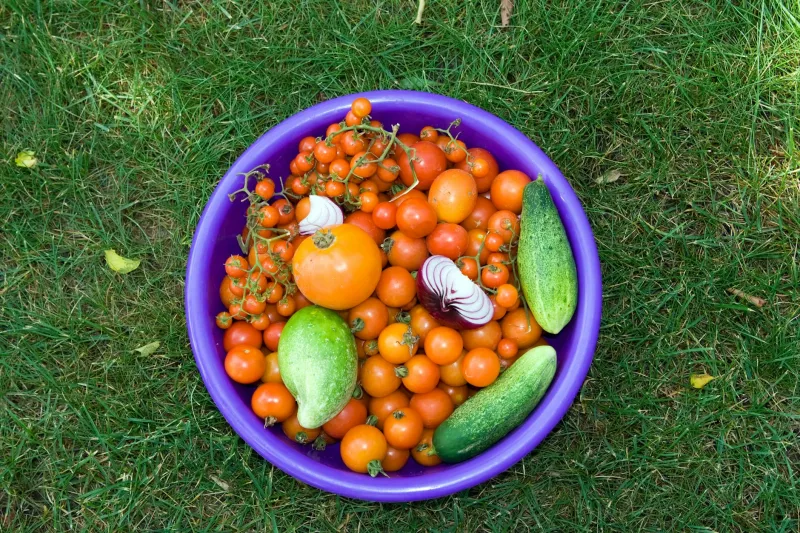
The most visible manifestation of this evolving approach is the community growing project that has taken root behind St Andrew's church hall. What began as a modest vegetable patch has expanded into a thriving garden that supplies fresh produce not only to the church's weekly community meals but also to a growing network of families throughout Chinnor.
"We're not just growing courgettes and runner beans," explains project coordinator Janet Williams, her hands still soil-stained from the morning's harvest. "We're growing relationships, skills, and understanding about where food comes from and what it means to eat well."
 Photo: Janet Williams, via www.janet-williams.com
The garden operates on principles that deliberately challenge conventional notions of charity. Rather than simply distributing produce to "recipients," the project invites community participation at every level. Families contribute labour according to their capacity—some tend seedlings, others help with harvesting, still others assist with the weekly distribution.
"It's not about us providing food for them," clarifies Reverend David Thompson, whose theological training increasingly includes conversations about creation care and food systems. "It's about all of us participating in the ancient rhythm of planting, tending, and harvesting together."
The Theology of the Table
This practical work has prompted deeper theological reflection across Chinnor's congregations. Bible study groups have begun exploring the extensive scriptural material relating to food—from the manna in the wilderness to Jesus's multiplication of loaves and fishes, from the dietary laws of Leviticus to Paul's instructions about sharing meals across social boundaries.
"When you really start looking, you realise that food is everywhere in scripture," observes Sarah Mitchell, who leads a monthly study group focused on biblical approaches to economic justice. "It's not incidental—it's central to how God relates to creation and how we're called to relate to each other."
These theological explorations have led to practical innovations. The Methodist chapel has initiated "abundance meals"—monthly gatherings where participants bring ingredients rather than finished dishes, cooking together and sharing not just food but the stories and traditions that surround particular recipes.
"Food carries culture," explains Pastor James Clarke, whose own Jamaican heritage has enriched the chapel's understanding of how eating practices connect to identity and belonging. "When we cook together, we're not just addressing hunger—we're building community across difference."
Challenging Consumption Patterns
Perhaps the most challenging aspect of Chinnor's evolving approach to food justice has been the willingness to examine their own consumption patterns. Several churches have initiated "creation care" groups that explore the environmental and ethical implications of food choices, from the carbon footprint of imported produce to the labour conditions of agricultural workers.
These discussions have led to practical changes. The Baptist church has committed to sourcing their coffee and tea from fair trade suppliers, while St Andrew's has implemented a "local first" policy for their community events, prioritising produce from within a twenty-mile radius when possible.
"It's uncomfortable sometimes," admits Margaret Hartwell, a longtime church member who has found herself reconsidering shopping habits she's maintained for decades. "You start asking questions about where things come from, who grew them, whether the prices we pay actually reflect the true cost of production. It challenges the idea that cheaper is always better."
The Economics of Generosity
This theological and practical work has led Chinnor's churches to experiment with alternative economic models that move beyond traditional charity structures. The "community cupboard" initiative, housed in the Methodist chapel, operates on principles of abundance rather than scarcity.
Unlike food banks that typically require referrals and means testing, the community cupboard invites anyone to take what they need and contribute what they can—whether that's money, food, or time. The result has been a steady flow of resources that supports not only families facing temporary financial difficulties but also busy parents, elderly residents, and anyone who simply finds themselves short of ingredients for the evening meal.
"We've discovered that when you trust people, they generally respond with integrity," reflects Reverend Susan Clarke, whose initial scepticism about the model has given way to amazement at its effectiveness. "There's something powerful about creating spaces where giving and receiving happen naturally, without bureaucracy or shame."
Seasonal Rhythms and Sustainable Practice
The agricultural heritage of the Chilterns region has provided additional inspiration for churches seeking to align their food practices with sustainable principles. Several congregations have begun incorporating seasonal awareness into their liturgical calendar, celebrating harvest festivals that acknowledge not just abundance but also the labour and environmental resources that make abundance possible.
The annual "Plough Sunday" service at St Andrew's now includes prayers not only for farmers but also for farmworkers, soil health, and weather patterns increasingly disrupted by climate change. These services connect ancient agricultural rhythms with contemporary concerns about sustainability and justice.
"When you pray for rain, you start paying attention to rainfall," observes Tom Richardson, whose family farm has become an informal education site for church members interested in understanding food production. "When you pray for farmworkers, you start thinking about wages and working conditions. Prayer makes you more aware, not less."
Building Bridges Beyond the Church
The success of these initiatives has attracted attention from secular organisations and local government bodies interested in addressing food poverty through community-led approaches. The Chinnor Parish Council has begun consulting with church leaders about incorporating food justice principles into local planning decisions, while the primary school has requested support for developing their own growing project.
"We're discovering that when churches take food justice seriously, it creates opportunities for collaboration that might not otherwise exist," explains Janet Williams, who now serves on a county-wide committee addressing rural food poverty. "People who might not share our theological convictions can still appreciate our commitment to practical action."
The Future of Food and Faith
As Chinnor's churches continue developing their approach to food justice, they're discovering that the work requires both immediate practical responses and long-term systemic thinking. The food bank continues operating, but alongside initiatives that address housing costs, transport poverty, and employment opportunities—all factors that contribute to food insecurity.
"We're learning that you can't separate food justice from housing justice, from economic justice, from environmental justice," reflects Reverend Thompson. "It's all connected, which means our response has to be connected too."
This holistic approach represents a significant evolution in how rural churches engage with social justice issues. Rather than simply responding to crises as they arise, Chinnor's faith communities are developing practices and perspectives that address root causes while maintaining the immediate care that has always characterised Christian service.
In church halls and community gardens, around shared tables and in theological reflection groups, ordinary Christians are discovering that the ancient call to "break bread with the hungry" requires both practical skills and prophetic imagination. The result is a vision of food justice that nourishes not only bodies but communities, not only individuals but the creation that sustains them all.