More Than a Meeting Room: The Quiet Ministry of Chinnor's Church Halls
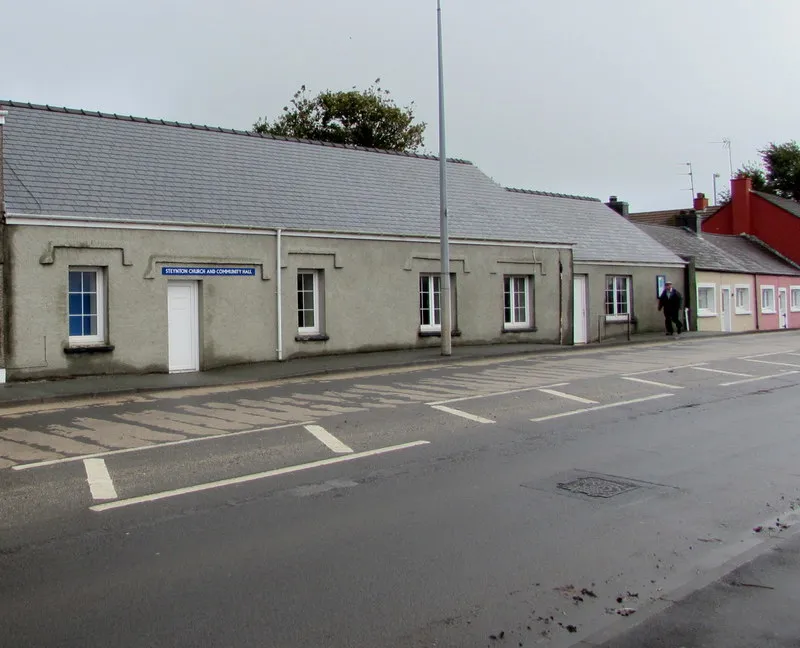
Photo: Jaggery, CC BY-SA 2.0, via Wikimedia Commons
On a damp Wednesday morning in October, the car park at one of Chinnor's village churches fills earlier than it does on any Sunday. By half past nine, pushchairs are stacked three deep against the entrance porch, the sound of a tambourine drifts through the hall's single-glazed windows, and the smell of instant coffee has thoroughly conquered the faint scent of hymn books. This is not a service. It is, in many respects, something equally sacred.
The humble church hall — that unassuming annexe of corrugated iron or 1970s brick that squats beside so many English parish churches — rarely features in architectural surveys or heritage listings. It is not the subject of devotional poetry. Yet across Chinnor and the surrounding Chilterns villages, these utilitarian spaces are quietly performing some of the most significant pastoral work in the community, seven days a week, long after the organ has fallen silent.
The Kettle as Communion
"People sometimes ask me whether I think what we do here is spiritual work," says Margaret Holloway, who has coordinated the hall bookings at her Chinnor church for eleven years. "I always say the same thing: if you sat in this room on a Tuesday afternoon and watched what happens between people who arrive alone and leave together, you wouldn't need to ask."
The Tuesday afternoon in question is a bereavement support group that has met fortnightly for the past six years. It began, Margaret explains, when a local vicar noticed that several recently widowed parishioners were attending Sunday services but leaving immediately afterwards, speaking to no one. The solution was almost embarrassingly simple: a room, a time, and a willingness to make tea.
What grew from that modest beginning now draws between twelve and eighteen people each fortnight, many of whom have no formal connection to the church itself. "We have people who haven't been inside a church for thirty years," Margaret notes. "But they come here because it feels safe. The building holds something — a kind of permission to be vulnerable."
This observation points to something that hall coordinators across the area return to repeatedly: the physical fact of a church building, even its ancillary rooms, carries a cultural weight that secular community spaces often lack. There is an implicit understanding that difficult emotions are permitted here; that the space has, over generations, absorbed more than its share of human sorrow and endured.
From Nought to Five and Back Again
Not every gathering carries such weight, of course. The toddler groups that animate church halls on weekday mornings represent a different but equally vital dimension of community ministry. At one Chinnor congregation, a parent-and-child group has operated continuously for over two decades, outlasting three different hall refurbishments and a complete turnover of volunteer helpers.
For Sarah Jennings, who began attending with her eldest child nine years ago and now helps run the group, the continuity matters enormously. "I was new to the village when I first came," she recalls. "I didn't know anyone. Within three weeks I had a whole network of people I could call if I needed help. That happened because of this room."
The group is deliberately non-denominational in character, welcoming families from all backgrounds and none. Craft activities, singalong sessions, and the reliable presence of a well-stocked biscuit tin do the work that no outreach programme could replicate. "You can't engineer belonging," Sarah says simply. "But you can create the conditions for it."
Spaces That Stretch
What distinguishes Chinnor's church halls from many community centres is their remarkable flexibility. In a single week, one hall might host a dementia-friendly café on Monday, a food bank distribution on Thursday, an amateur dramatic rehearsal on Friday evening, and a children's birthday party on Saturday afternoon — before the chairs are rearranged once more for Sunday worship.
This versatility is not accidental. Several local hall committees have made a conscious decision in recent years to prioritise community use over income generation, accepting modest hire fees from groups serving genuine social need. The financial calculus is, by any conventional measure, unfavourable. The pastoral calculus is rather different.
"We could charge market rates and probably fund a new roof," admits one church treasurer with characteristic candour. "But then we'd be a venue, not a community resource. There's a meaningful difference."
The distinction matters theologically as well as practically. For many of Chinnor's congregations, the church hall represents an extension of their core mission: to serve the neighbourhood, not merely to maintain an institution. When a local mental health charity approached one church for affordable space to run a weekly drop-in session, the answer was immediate. When a newly formed Ukrainian community group needed somewhere to meet following the events of 2022, church halls across the area offered rooms without hesitation.
The Invisible Glue
Perhaps the most striking feature of Chinnor's church hall culture is how little of it appears in any official record. There are no league tables for community impact, no metrics for loneliness alleviated or friendships formed. The work is largely invisible, sustained by volunteers who would be deeply uncomfortable with any suggestion that they deserve recognition.
"I just make sure the urn is on and the chairs are out," says one regular volunteer, deflecting with the particular modesty that seems to characterise this kind of service. "The rest takes care of itself."
But the rest does not, in truth, take care of itself. It is sustained by people who arrive early and leave late, who remember that one regular takes two sugars and that another prefers to sit near the door. It is built from accumulated small acts of attention that, over months and years, constitute something indistinguishable from love.
In an era when loneliness has been formally recognised as a public health crisis — and when the social infrastructure of English village life continues to contract — the church hall stands as quiet evidence that another way of organising community remains possible. It asks very little of those who enter: only that they come, and stay a while, and perhaps pour someone else a cup of tea.
That, it turns out, may be quite enough.