Thanksgiving Without the Tractor: An Argument for Reinventing the Harvest Festival
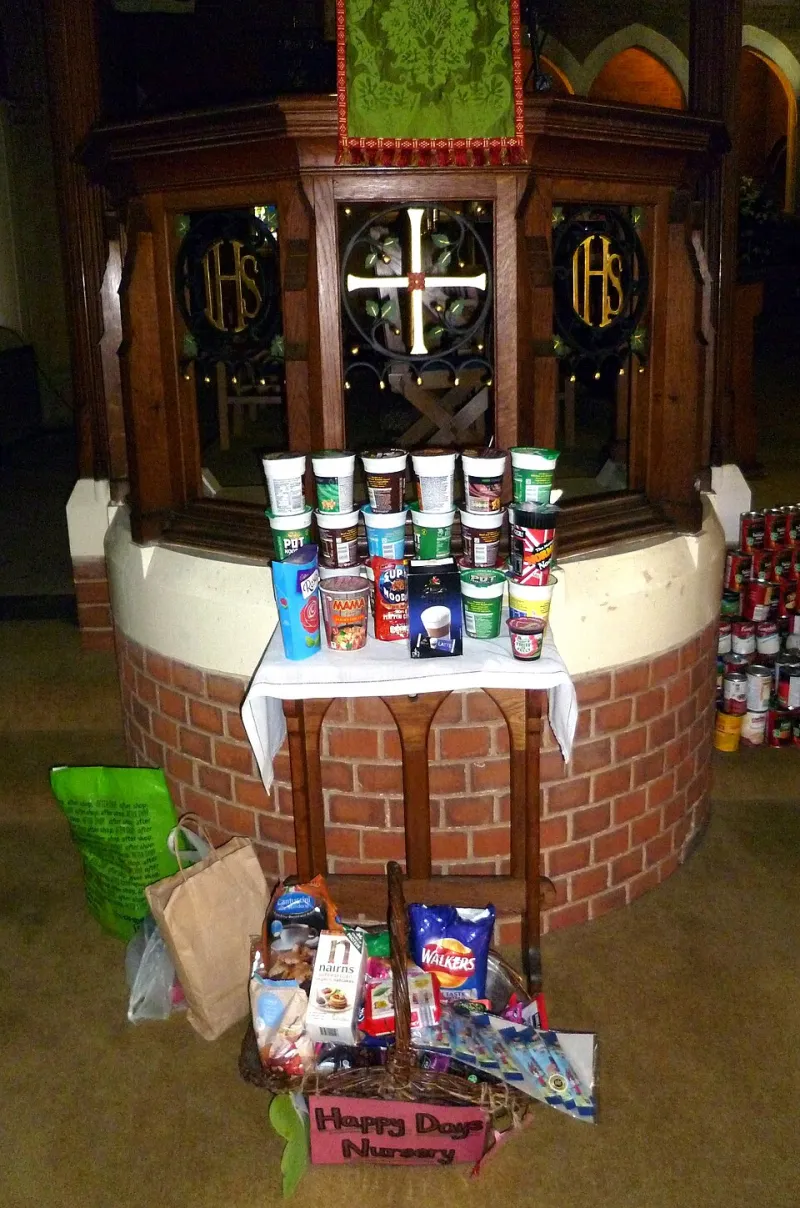
Photo: Philafrenzy, CC BY-SA 4.0, via Wikimedia Commons
There is a peculiar nostalgia at the heart of the modern Harvest Festival. We decorate our churches with marrows and tins of soup, sing of the plough and the sickle, and give thanks for a way of life that scarcely any of us live. In a village like Chinnor, where agriculture employs a small fraction of the population, one might reasonably ask what we are thanking God for — and whether the festival has quietly become an exercise in memory rather than gratitude.
I want to argue the opposite case: that Harvest is more relevant now than it has been for decades. But only if we are honest about what harvest means in the twenty-first century.
The Problem with Nostalgia
The traditional service presumes a community bound to the soil. When the congregation were farm labourers, thanking God for the wheat harvest was thanking Him for next year's bread — theirs and everyone's. The gratitude was existential.
For most of us, the connection has severed. Our food arrives via supermarkets and supply chains; our vulnerability to weather is mediated by logistics we never see. A service that thanks God for the harvest without acknowledging this distance risks sentimentality — gratitude for a picture, not a reality.
What We Actually Harvest
Yet look around Chinnor and the harvests are everywhere. They are simply of a different kind.
There is the harvest of the allotments — and Chinnor's allotment holders will tell you that growing your own has seen a genuine revival, driven partly by pandemic habits that refused to die. There is the harvest of the food bank, whose volunteers gather surplus and generosity into provision for families who would otherwise go without. There are the local producers — the dairies, bakers and market gardens of the wider Chilterns — whose work keeps some thread of connection between this soil and our tables.
Clergy in the area are beginning to name these harvests explicitly. One rural officer put it to me plainly: 'The question is not whether the harvest has disappeared. It is whether we have stopped noticing the ones still happening.'
What the Farmers Say
Speaking with those who still work the land around the Chilterns sharpens the point. Farmers I spoke to do not want our nostalgia; they want our understanding. One described a difficult season of flooded ground and delayed drilling, and the strange comfort of a Harvest service where the congregation actually knew what the year had cost him.
'You can have the tins of beans,' he said, laughing. 'What I would value is people praying about the price of fertiliser with the same seriousness they pray about anything else.' That is a challenge to the churches: not to abandon the agricultural harvest, but to engage with it honestly — including its economics, its uncertainties and its mental toll.
A Reinvented Festival
What might a modern Harvest look like in Chinnor? Several possibilities suggest themselves.
A service of thanksgiving that honours the whole food chain — farm workers, hauliers, shop staff and food bank volunteers alike. Harvest contributions directed deliberately to the local food bank, with the congregation invited to learn what it actually needs rather than donating what feels traditional. A shared meal afterwards built from local produce, where allotment holders and farmers sit with those who have never grown a thing. And perhaps, in October, a blessing of the allotments — small plots though they are, they represent the most direct experience of dependence on weather that most of us now possess.
Gratitude as Practice, Not Performance
The deeper argument is theological. Thanksgiving is not meant to be a performance of a past we have lost; it is a discipline for the present. A Harvest Festival that only looks backwards teaches us to be grateful for history. One that names today's harvests — the food on our tables, the neighbours who provide it, the gifts of ground and season we still depend on — teaches us to be grateful at all.
The harvest has not ended. It has changed shape. The question is whether Chinnor's churches will change shape with it. I believe we should — and that if we do, Harvest might once again become the most honest service of our year.