Pedalling Towards Purpose: The Chilterns Cycling Fellowships Bringing Faith Out of the Building
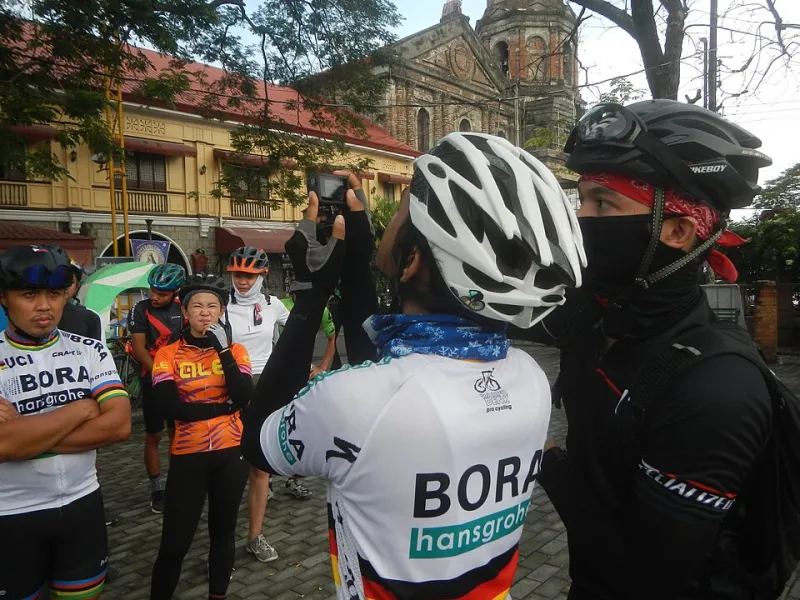
Photo: Judgefloro, CC0, via Wikimedia Commons
On a crisp Saturday morning in early spring, a group of eleven cyclists assembles in the car park of a Chinnor church. Their ages range from mid-twenties to late sixties. Some are regular churchgoers; others have not attended a service in decades; one or two have never attended any church at all. They are united, for now, by cycling helmets, a shared route map, and a thermos of tea that is being passed around with quiet generosity.
Before they set off into the Chilterns hills, someone reads a short passage — not a sermon, not a formal prayer, but a few lines from the Psalms about pathways and open skies. Then they ride.
This is the Chinnor Cycling Fellowship, and it is one of a small but growing number of faith-connected cycling groups operating across the area. What began as an informal arrangement between a handful of congregation members has evolved into a recognised ministry — one that is attracting people the Church has struggled to reach through conventional means, and doing so not by compromising its identity, but by expressing it differently.
Why Movement and Ministry Are Natural Partners
The idea that physical activity and spiritual practice belong together is hardly new. Pilgrimage — walking as an act of faith — is among the oldest religious traditions in the world. The Camino de Santiago draws hundreds of thousands of walkers annually, many of them people who would not describe themselves as conventionally religious but who are drawn by something they cannot quite name: a desire for reflection, for simplicity, for a pace of life that allows genuine thought.
Cycling occupies a similar psychological space. It requires enough concentration to quiet the anxious chatter of the mind, while leaving sufficient room for the kind of unhurried reflection that is difficult to achieve at a desk or in a meeting room. The Chilterns landscape — its beech woods, chalk valleys, and long ridge-top views — provides what those who lead these rides frequently describe as a natural context for awe and gratitude.
Dr Sarah Pemberton, a theologian who has written on embodied spirituality in the British context, observes that many people experience what she calls "thin places" not in churches but in landscapes. "There is a long tradition in Celtic Christianity of encountering the sacred in the natural world," she notes. "Cycling through the Chilterns, with all its seasonal beauty, can be genuinely conducive to a kind of openness that formal worship sometimes struggles to produce."
How the Fellowships Work in Practice
The Chinnor Cycling Fellowship meets twice monthly, with rides varying in length and difficulty to accommodate different levels of fitness and experience. Routes are chosen partly for their scenic qualities and partly for the opportunities they create to pause — at a churchyard, at a viewpoint, at a village green — for brief moments of reflection or conversation.
These pauses are deliberately low-key. A question might be posed for the group to consider as they ride: What are you grateful for this week? Where have you noticed beauty recently? Is there something you are carrying that feels heavy? Nobody is obliged to respond, and no theological position is assumed or required. The conversations that follow, participants report, are often among the most honest they have in any week.
A similar model has been adopted by at least two other congregations in the surrounding area, with one group focusing specifically on families with children — a recognition that younger riders often find the outdoors a more natural setting for spiritual conversation than a Sunday school classroom.
Equipment is not a barrier to entry. The fellowship maintains a small pool of loaned bicycles for those who do not own one, and routes are always planned with accessible alternatives for those whose mobility requires a shorter or flatter option.
Reaching Beyond the Congregation
Perhaps the most significant aspect of these cycling ministries is who they are reaching. Church leaders across the UK have wrestled for years with the challenge of connecting with people who feel no particular hostility towards faith but have simply drifted away from formal religious practice — or never engaged with it in the first place. The cycling fellowship model offers something that a Sunday morning service, however welcoming, often cannot: a point of entry that requires no prior commitment, no doctrinal knowledge, and no willingness to sit in a building.
"We've had people join us who were quite explicit that they weren't interested in church," says David Hartley, one of the fellowship's founding members and a lay reader at his local congregation. "But they were interested in cycling, and they were interested in good company. Over time, some of those conversations have led somewhere quite unexpected. Not always towards formal faith — but towards something. Towards asking questions. Towards a sense that life has more depth than they'd been giving it credit for."
This approach resonates with a broader shift in thinking about evangelism and outreach within mainstream British churches. The idea of 'church as a destination' — a place people come to — is increasingly giving way to a model of 'church as a presence' — a community that goes where people already are. Cycling, in this sense, is not merely a recreational activity with a spiritual gloss applied. It is a genuine expression of what it means to be the Church in the world.
The Theology of the Open Road
For those within the fellowships who do hold an active faith, the cycling itself has become a form of practice. Several members describe the experience of riding through the Chilterns as naturally meditative — a kind of moving prayer. The physical effort, the attention required by the road, the beauty of the landscape: together, these create conditions in which it becomes easier, not harder, to be present.
One participant, a retired teacher who has cycled with the fellowship since its second month of operation, puts it simply: "When I'm on the bike, going up a hill, I'm not thinking about my emails or what I said in a meeting last Tuesday. I'm just there, breathing, moving. And in that space, I find I can actually pray. Properly pray, not just recite words."
The fellowship also takes an annual longer ride — typically a two-day journey following a historical pilgrimage route — which includes an overnight stay at a retreat house and a more extended period of shared reflection. Last year's route traced a section of the ancient Ridgeway, one of Britain's oldest roads, connecting the physical act of travelling with a tangible sense of continuity with those who have walked or ridden the same paths across centuries.
A Ministry Still Finding Its Shape
Those who lead these groups are candid about the fact that cycling ministry is still evolving. Questions of safeguarding, insurance, and the appropriate balance between structured reflection and open-ended conversation are worked through as they arise. There is no established denominational framework for this kind of outreach, which means that local leaders must exercise considerable creativity and judgement.
But there is also, among those involved, a palpable sense of excitement — the feeling that something genuinely new and genuinely useful is being discovered. In a landscape as beautiful as the Chilterns, with communities as varied and searching as those that make up the Chinnor area, faith on two wheels may prove to be one of the more enduring innovations of this generation's Church.