Held in Confidence: The Pastoral Carers Who Walk Beside Chinnor's Families in Their Hardest Hours
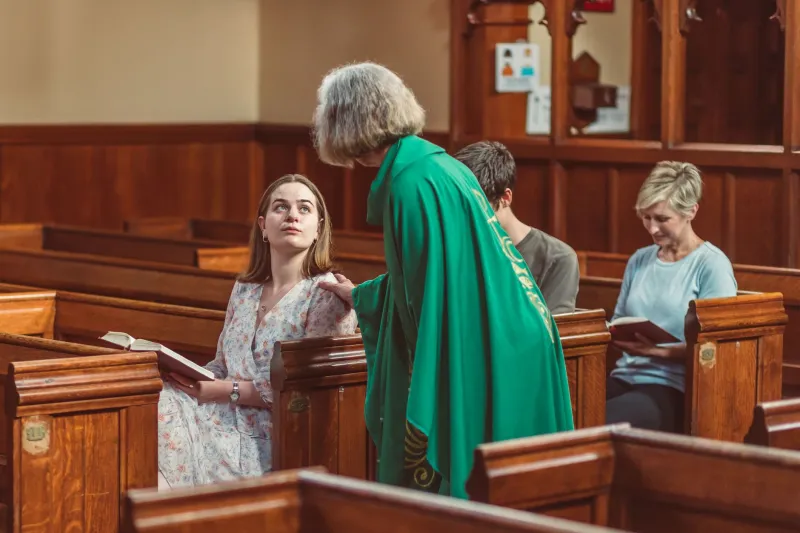
The church hall on a Wednesday afternoon looks unremarkable. Chairs are arranged in a loose circle. A box of tissues sits on a side table with the practised discretion of long experience. Through the window, the churchyard is still and grey. Inside, two people are talking — one who is struggling to hold their life together, and one who has been trained to sit with that struggle without flinching.
This is pastoral care. Not the polished version that appears in parish newsletters, but the raw, unglamorous, essential version that happens in living rooms and hospital corridors and over cups of tea that grow cold before they are drunk. Across Chinnor and the wider Chilterns, a network of quietly dedicated individuals provides exactly this kind of support to people navigating some of the most painful experiences a human life can offer.
The Invisible Architecture of Support
Every congregation in Chinnor carries, within its membership, people who are suffering. Divorce, bereavement, mental illness, addiction, estrangement, financial ruin — these are not exceptional circumstances. They are the ordinary crises of ordinary lives, and they arrive without warning and without regard for the liturgical calendar.
The churches' response to this reality has evolved considerably over recent decades. Where once a vicar might have made a brief pastoral call and offered a prayer, many congregations now maintain structured networks of trained pastoral visitors — lay volunteers who have undertaken accredited listening and support courses, and who are supervised regularly by a minister or professional counsellor. Some churches have formal partnerships with organisations such as Relate or local NHS mental health services, providing a bridge between spiritual and clinical support.
"We are not therapists," says one pastoral visitor who has been active in a Chinnor congregation for seven years. "We don't diagnose, and we don't prescribe. What we do is show up, listen without judgement, and help people feel less alone. Sometimes that is the most important thing."
Training for the Tender Places
The journey to becoming a pastoral carer is not taken lightly. Most volunteers undertake a recognised course — commonly the Churches' Pastoral Supervision training, or programmes offered through the Acorn Christian Foundation or similar bodies — before they begin working with individuals in distress. These courses cover active listening, confidentiality, appropriate boundaries, safeguarding, and the recognition of situations that require referral to statutory services.
Training does not end with a certificate. Ongoing supervision — regular meetings with an experienced supervisor in which casework is discussed in general terms, without breaching confidentiality — is considered essential. Several of Chinnor's pastoral carers describe supervision as the element of their work they value most, not least because it provides a space in which they themselves can process the emotional weight of what they encounter.
"You hear things that stay with you," acknowledges one pastoral carer who supports bereaved families across two local congregations. "You don't carry the stories home in detail — that would be a breach of trust — but you carry the feeling of them. Supervision helps you put that down somewhere safe before it accumulates."
The Particular Weight of Grief
Bereavement is among the most frequent reasons that people seek pastoral support, and it is also among the most misunderstood. Well-meaning friends and family often expect grief to follow a recognisable trajectory — shock, sadness, acceptance — and become uncomfortable when it does not. The pastoral carer's role is, in part, to offer a relationship in which grief is permitted to be complicated, prolonged, and non-linear.
For those who have lost a spouse of many decades, or a child, or a parent to dementia's slow erasure, the church community can provide a continuity of care that statutory bereavement services, stretched thin across the county, are often unable to sustain. Pastoral visitors may call weekly for months, accompany a bereaved person to a difficult medical appointment, or simply sit in companionable silence when words have run out.
"There are visits where nothing much is said," reflects one volunteer. "We might look at photographs together, or I might help with a letter that needs writing. People don't always need advice. They need someone to be there."
When the Crisis Is Addiction or Mental Illness
Perhaps the most challenging territory for pastoral carers is that of addiction and mental health crisis. These are areas in which the boundaries between spiritual support and clinical intervention can become blurred, and in which the risk of causing inadvertent harm — through well-intentioned but uninformed responses — is real.
Chinnor's churches have responded by building close working relationships with local professional services, and by being explicit with those they support about the limits of what pastoral care can offer. The role of the pastoral visitor in these circumstances is not to provide therapy but to remain a consistent, non-judgemental presence while encouraging appropriate professional engagement.
Several pastoral carers describe the particular difficulty of supporting someone whose family is also affected — where a parent's alcoholism, for instance, is fracturing the lives of children or a spouse. "You can only work with the person in front of you," says one experienced volunteer. "But you hold the whole family in mind. You pray for them. You hope."
The Toll and the Grace
It would be dishonest to present pastoral care as a uniformly rewarding vocation. It is tiring, emotionally demanding work, and not every story has a hopeful ending. Carers sometimes accompany people through situations that do not improve, and must find a way to remain present and engaged without requiring resolution as a condition of their compassion.
And yet those who do this work describe it, almost universally, as among the most meaningful things they have done. Many speak of receiving as much as they give — of being changed by the trust placed in them, of finding their own faith deepened by proximity to others' extremity.
"I came to it thinking I had something to offer," says one pastoral visitor. "And perhaps I do. But what I didn't expect was how much I would receive. The courage I see in the people I visit — it is extraordinary. It keeps me going."
A Ministry Without Fanfare
Pastoral care will never be the most visible expression of a congregation's life. It happens behind closed doors, in conversations that are never written up or reported. Its outcomes are not easily measured, and its practitioners do not seek recognition. But for the individuals and families who have been held steady by a pastoral visitor during a period of crisis, its value is beyond calculation.
In Chinnor's churches, this ministry continues week by week, largely unannounced and entirely indispensable. It is, in the most literal sense, the love of neighbour made practical — and it is one of the most genuinely Christian things these communities do.