Unity Across the Pews: The Remarkable Rise of Interfaith Collaboration in Chinnor's Sacred Spaces
A New Chapter in Christian Fellowship
In the rolling hills of the Chilterns, something extraordinary is taking place within Chinnor's church communities. What began as tentative conversations between clergy has blossomed into a remarkable testament to Christian unity that transcends denominational boundaries. The various congregations—Anglican, Methodist, Catholic, and independent churches—have embarked upon an ambitious journey of ecumenical cooperation that is reshaping the spiritual life of this historic Oxfordshire village.
The transformation didn't happen overnight. Three years ago, Reverend Sarah Matthews of St Andrew's Anglican Church and Father Michael O'Brien from Our Lady of Grace Catholic Church found themselves discussing the declining attendance at their respective evening services during a chance encounter at the village shop. What started as a practical conversation about resource sharing soon evolved into something far more profound: a vision of Christian unity that would honour both tradition and innovation.
Breaking Down Barriers Through Shared Worship
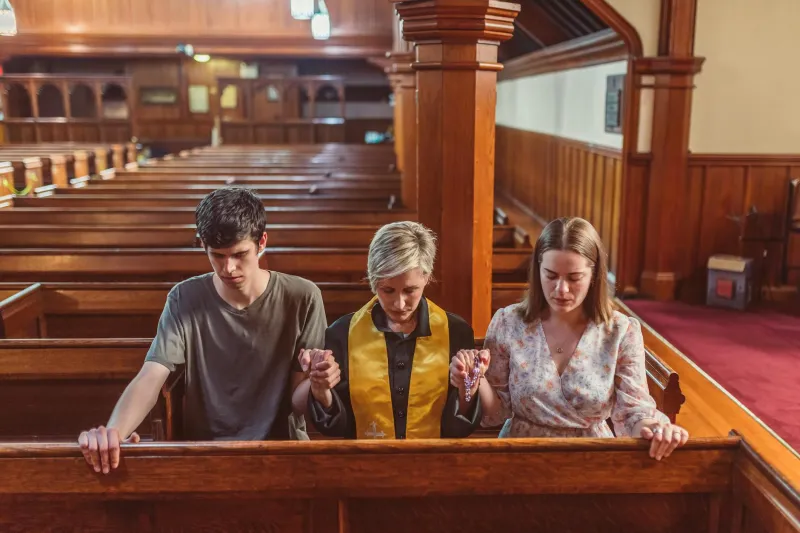
The first joint service held in September 2021 drew a modest congregation of forty worshippers from across the denominational spectrum. Today, the monthly ecumenical services regularly attract over 120 participants, creating a vibrant tapestry of faith traditions that enriches the spiritual experience for all involved.
"I was initially apprehensive," admits Margaret Thornton, a lifelong Methodist who has attended Chinnor Methodist Chapel for forty-seven years. "I wondered whether we might lose something of our own identity. Instead, I've discovered that worshipping alongside Catholics and Anglicans has deepened my understanding of what it truly means to be Christian. The shared prayers, the collective singing, the unified communion—it's given me a glimpse of what the early church might have felt like."
These services carefully navigate the theological differences between traditions whilst celebrating their shared foundations. The liturgy incorporates elements familiar to all denominations: traditional hymns sung in four-part harmony, contemporary worship songs led by a combined choir, and prayers that draw from the rich heritage of Christian spirituality across the centuries.
Practical Steps Towards Unity
The success of Chinnor's ecumenical movement lies not in grand gestures but in practical, thoughtful steps that respect each tradition's distinctiveness whilst building bridges of understanding. The churches established a rotating venue system, ensuring that each congregation hosts the monthly services in turn. This arrangement allows worshippers to experience the unique atmosphere and architectural beauty of each sacred space.
Perhaps most significantly, the churches have developed a shared training programme for lay ministers and pastoral care volunteers. This initiative, now in its second year, brings together members from all denominations to study scripture, explore pastoral techniques, and develop practical skills for community outreach. The programme has produced eighteen newly qualified lay ministers who serve across denominational lines, providing spiritual support wherever it's most needed.
Theological Bridges and Respectful Dialogue
Navigating doctrinal differences requires both sensitivity and theological sophistication. The clergy have established monthly discussion groups where contentious issues are addressed with scholarly rigour and pastoral care. These sessions, open to all congregation members, have tackled topics ranging from the role of Mary in Christian faith to different approaches to communion and baptism.
"We've discovered that our differences often stem from emphasis rather than fundamental disagreement," explains Pastor David Williams from Chinnor Community Church. "When we focus on Christ as our common centre, the denominational boundaries become less like walls and more like different paths up the same mountain."
The theological discussions have led to innovative compromises that honour all traditions. During joint communion services, multiple forms of the sacrament are offered simultaneously, allowing each worshipper to participate according to their conscience and tradition whilst maintaining the unity of the shared meal.
Community Impact Beyond Sunday Morning
The ecumenical spirit has extended far beyond worship services into practical community engagement. The churches have pooled resources to establish the Chinnor Christian Food Bank, which operates from a shared facility and draws volunteers from all congregations. This initiative has provided emergency food support to over 200 families in the past eighteen months, demonstrating the tangible benefits of unified Christian action.
The annual Pentecost Walk, now in its third year, sees the entire ecumenical community process through Chinnor's streets, stopping at each church for prayers and readings. This visible demonstration of Christian unity has become a highlight of the village calendar, drawing participation from residents who rarely attend regular services.
Personal Transformations and Renewed Faith
For many participants, the ecumenical experience has brought unexpected personal renewal. James Fletcher, a Catholic who moved to Chinnor two years ago, found himself spiritually reinvigorated by the experience: "I'd become rather set in my ways, comfortable with familiar routines. Worshipping with Methodists and Anglicans challenged me to rediscover the joy and wonder in my faith. Their different perspectives on scripture have opened up passages I thought I knew completely."
The youth programmes have perhaps seen the most dramatic transformation. The combined youth group, drawing teenagers from all denominations, has grown from twelve to forty-five members. These young people, unburdened by historical denominational tensions, are pioneering new forms of worship that blend traditional and contemporary elements with remarkable creativity.
Looking Towards the Future
As Chinnor's ecumenical experiment enters its fourth year, the participating churches are exploring even deeper levels of cooperation. Plans are underway for a shared confirmation programme, joint mission trips to support Christian communities in Eastern Europe, and a collaborative approach to clergy training that would see ministers spending time in each denomination during their formation.
The impact extends beyond Chinnor itself. Delegations from across the Chilterns and beyond have visited to observe and learn from this model of Christian unity. The Diocese of Oxford has formally recognised the initiative as an exemplar of twenty-first-century ecumenism, whilst the Methodist District has incorporated Chinnor's practices into their training materials for ministers.
In an age when religious divisions often dominate headlines, Chinnor's churches offer a compelling alternative narrative. Their journey demonstrates that Christian unity need not require the abandonment of cherished traditions but rather their enrichment through respectful encounter with other expressions of faith. As the congregation continues to grow together in faith, worship, and service, they provide a beacon of hope for communities seeking to bridge ancient divides whilst remaining faithful to their deepest convictions.